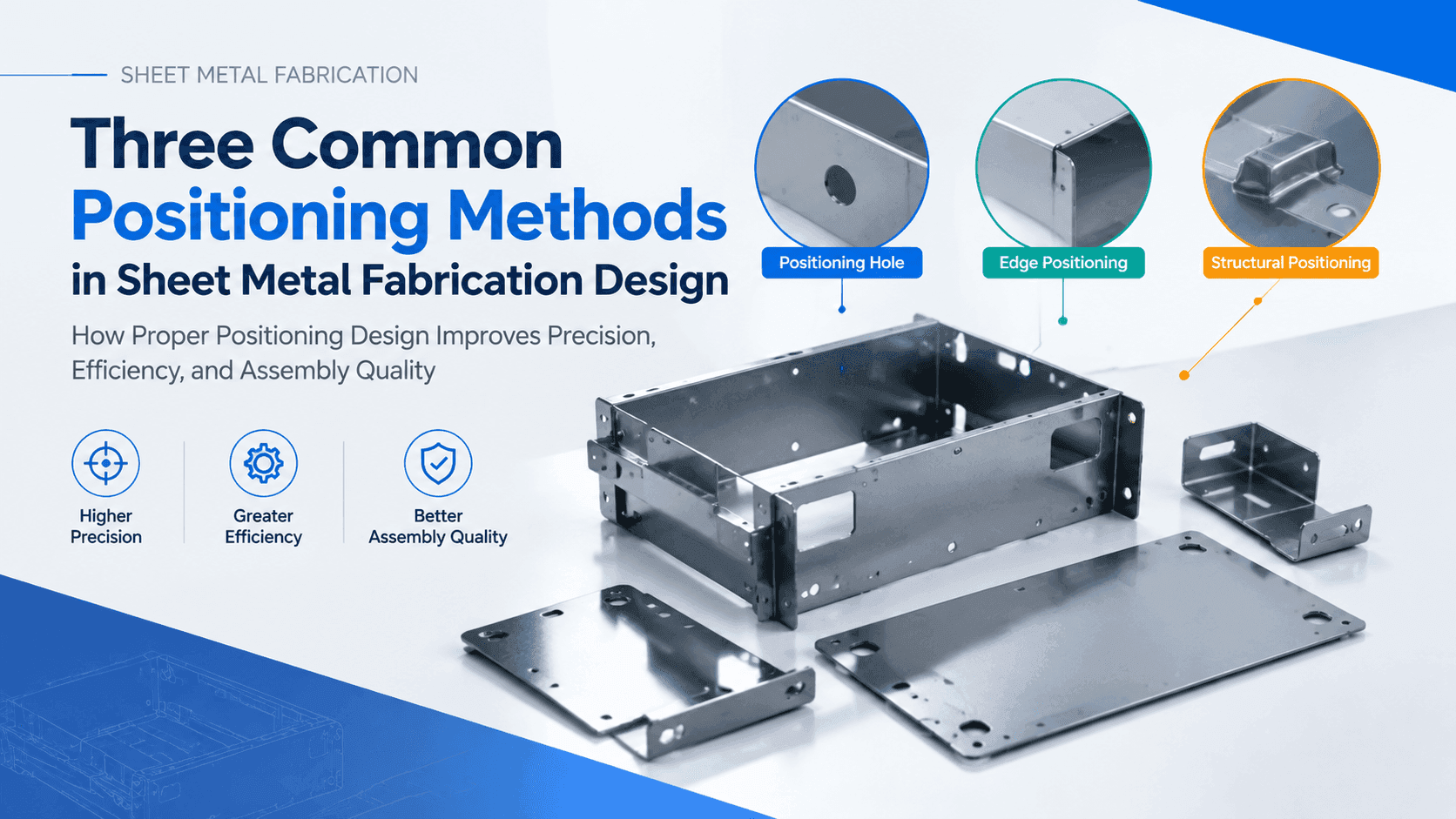
In sheet metal fabrication, achieving accurate assembly is one of the most important factors affecting product quality. Even with advanced CNC cutting, bending, and welding equipment, improper positioning design can lead to assembly errors, poor fit, and increased production costs. A well-designed positioning structure helps manufacturers maintain consistency, improve manufacturing efficiency, and reduce errors during fabrication and assembly. In this article, we will introduce three common positioning methods used in sheet metal fabrication design and explain how they are applied in precision metal manufacturing.
Sheet metal parts often require multiple processes, including:
During these processes, small dimensional variations may occur due to material thickness, bending tolerance, and manufacturing conditions. Proper positioning design provides a reliable reference point for assembly and ensures that each component is installed in the correct location. For manufacturers, effective positioning methods can:
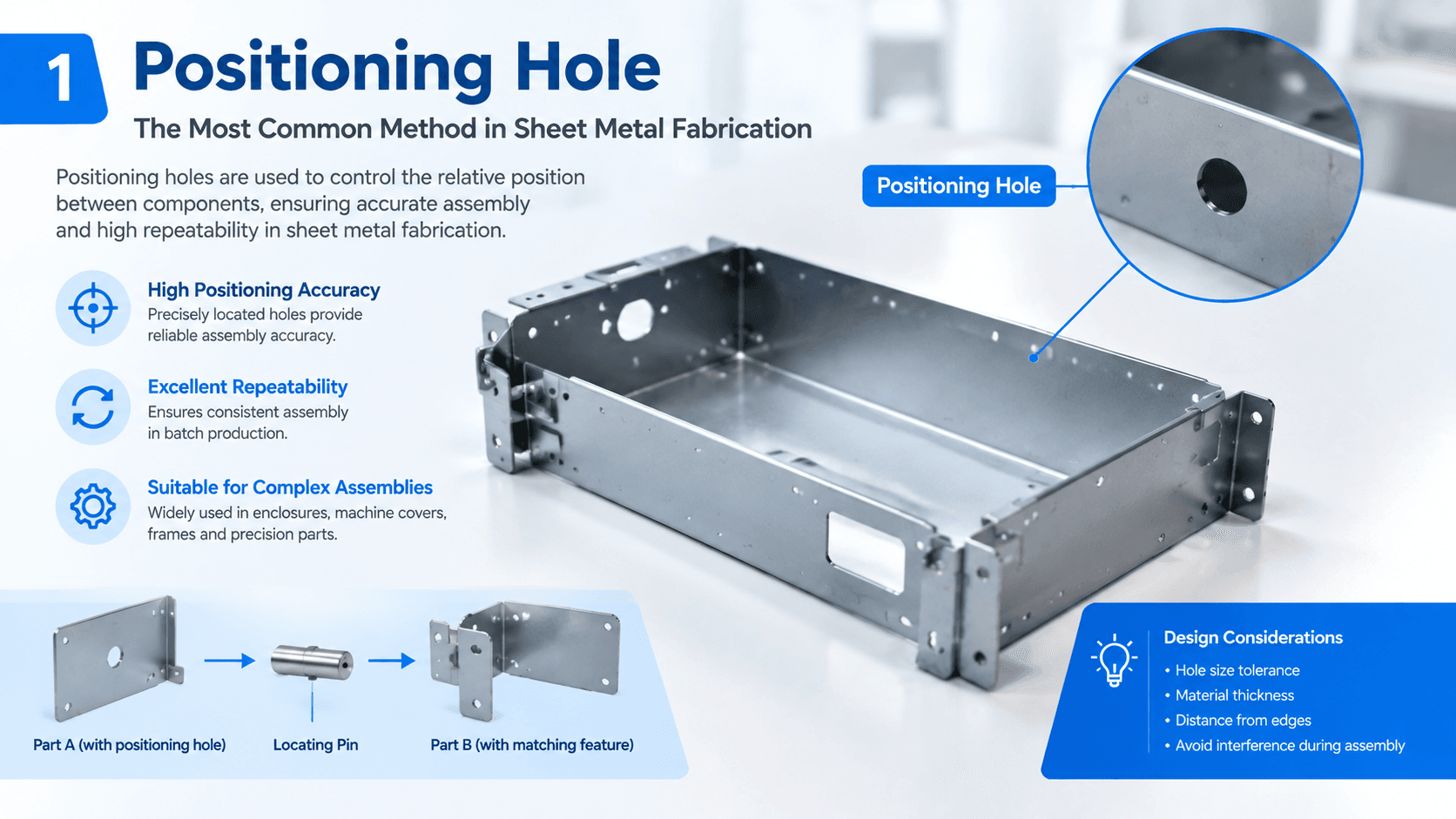
Positioning holes are one of the most widely used methods in precision sheet metal fabrication. This method uses accurately designed holes, pins, or locating features to control the relative position between components.
For example, one sheet metal part may include positioning holes, while another component uses pins or matching features to achieve accurate alignment.
Because the location of the hole is controlled during CNC machining or laser cutting, positioning holes provide reliable assembly accuracy.
For products manufactured in batches, positioning holes allow every part to be assembled in the same position.
They are commonly used in:
When designing positioning holes, engineers should consider:
Too many positioning holes may increase manufacturing difficulty or create unnecessary constraints. A balanced design provides both accuracy and production efficiency.
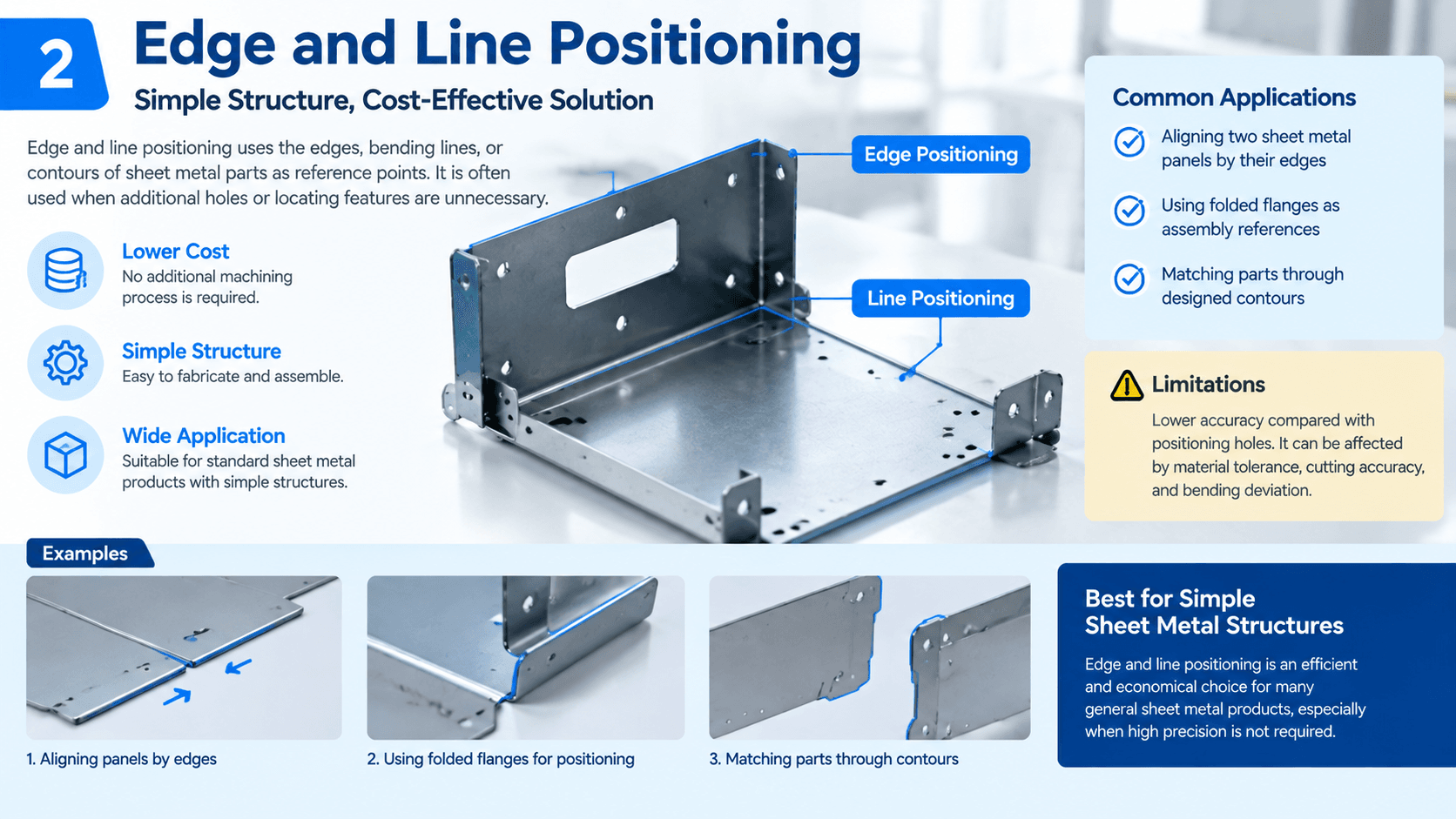
Edge positioning uses the edges, bending lines, or contours of sheet metal parts as reference points. This method is often used when additional holes or locating features are unnecessary. Examples include:
No additional machining process is required, which helps reduce manufacturing costs.
Suitable for many standard sheet metal products with simple structures.
This method works well for:
Compared with positioning holes, edge positioning usually provides lower accuracy because it can be affected by:
Therefore, it is better suited for applications that do not require extremely high precision.
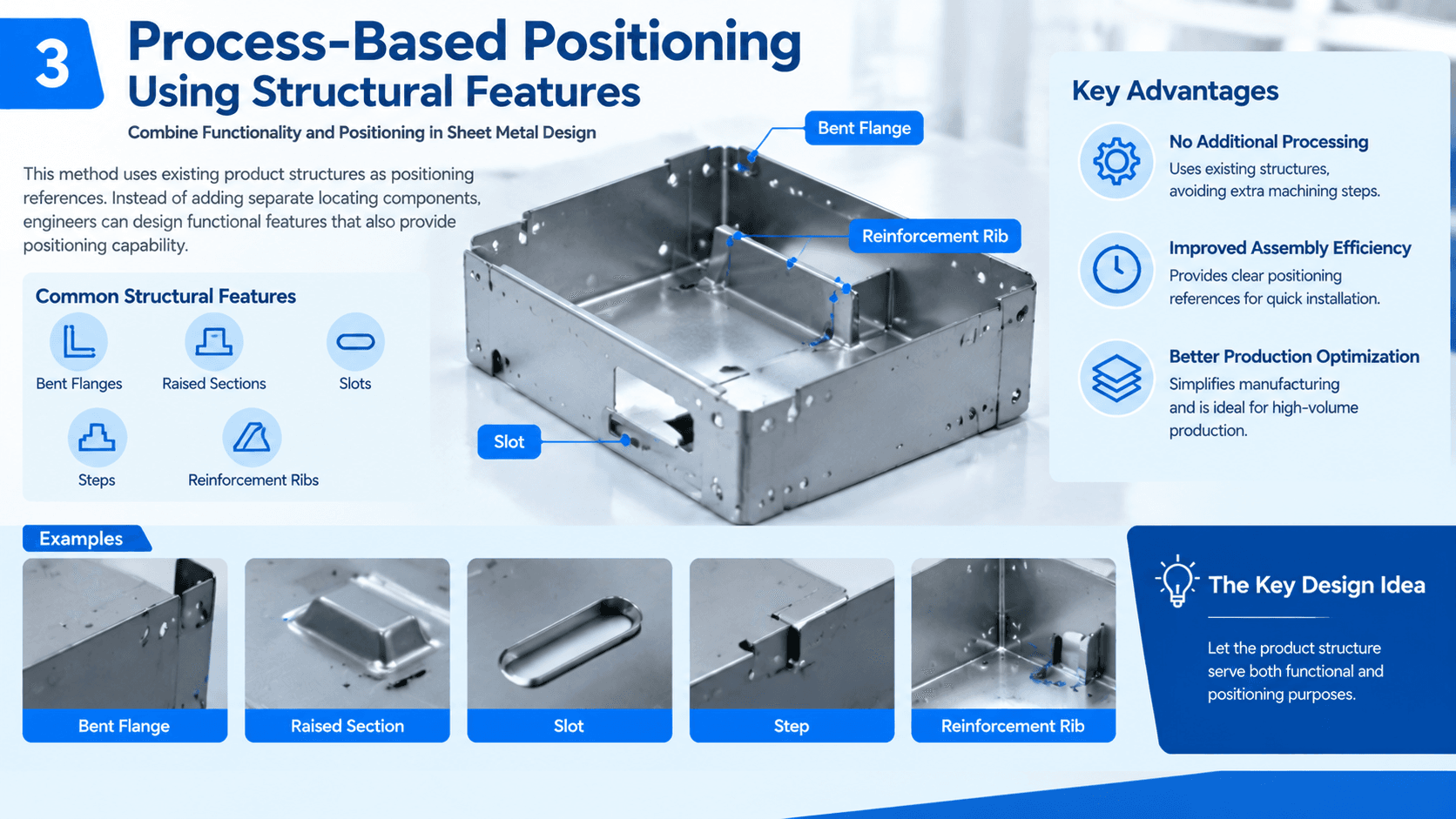
The third method uses existing product structures as positioning references. Instead of adding separate locating components, engineers can design functional features that also provide positioning capability. Common examples include:
This approach combines product functionality with manufacturing requirements.
Since the positioning features are already part of the product structure, extra machining steps can be avoided.
Operators can quickly identify the correct assembly position, reducing installation time.
For high-volume sheet metal production, integrated positioning structures help simplify manufacturing workflows.
| Positioning Method | Accuracy | Cost | Typical Applications |
|---|---|---|---|
| Positioning Hole | High | Medium | Precision assemblies, welding fixtures |
| Edge Positioning Structural Features | Medium | Low | Standard sheet metal products |
| Structural Positioning Features | Medium to High | Low to Medium | Mass production components |
The best positioning method depends on product requirements, manufacturing processes, and assembly accuracy. For precision sheet metal fabrication projects:
In many real-world applications, engineers combine multiple positioning methods to achieve the best balance between accuracy, cost, and manufacturability.
At Longwang, we understand that successful sheet metal manufacturing starts with smart design.
Our engineering team provides professional support in:
By applying proper positioning principles during the design stage, we help customers achieve higher accuracy, faster assembly, and more reliable products. Whether you need prototypes or high-volume production, Longwang delivers precision sheet metal fabrication solutions tailored to your requirements.
Contact LongWang today for professional sheet metal fabrication services.
Next
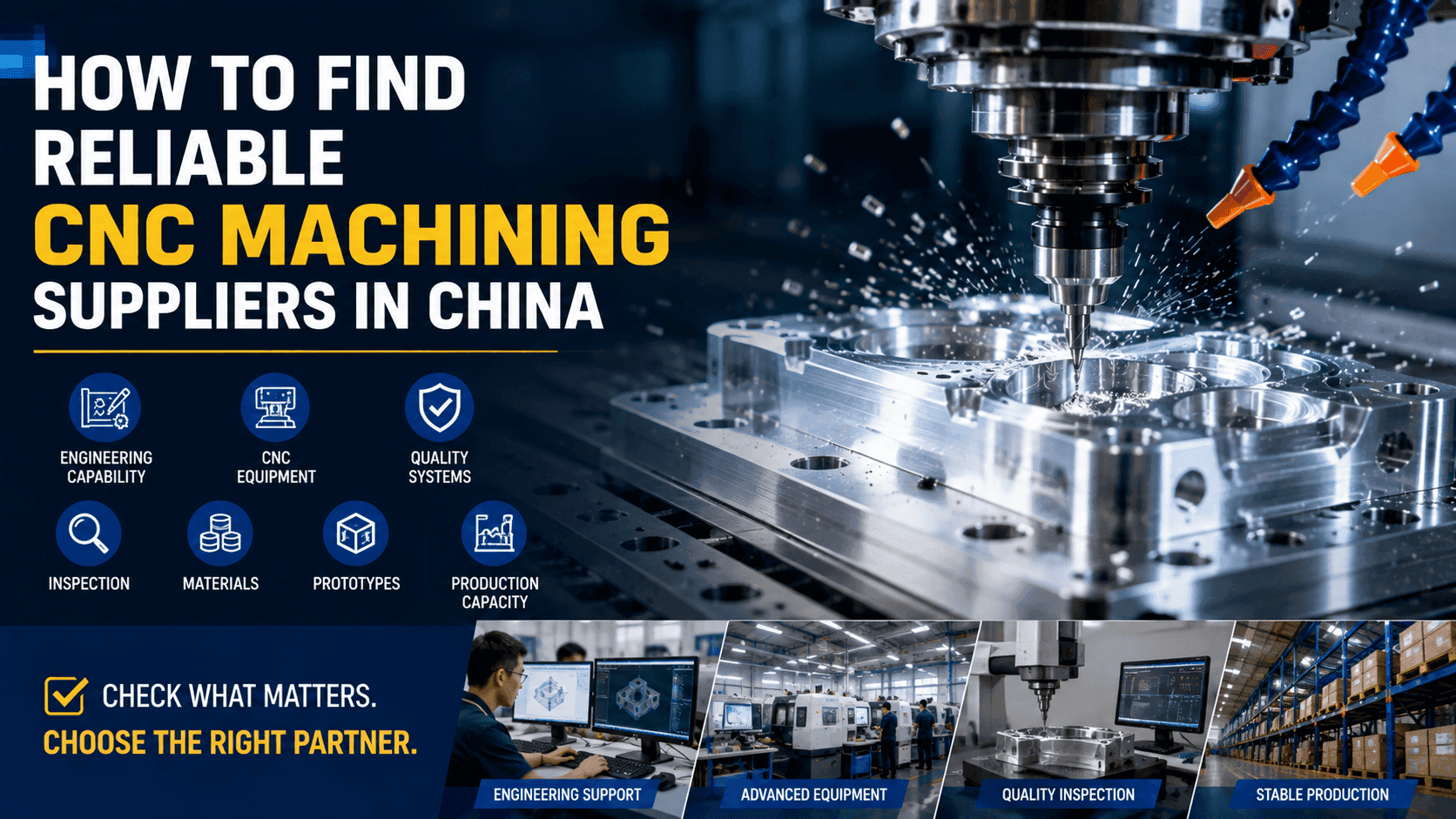
How to Find Reliable CNC Machining Suppliers in China?
2026-08-31Learn how to find reliable CNC machining suppliers in China. Check engineering capability, CNC equipment, quality systems, inspection, materials, prototypes, and production capacity.
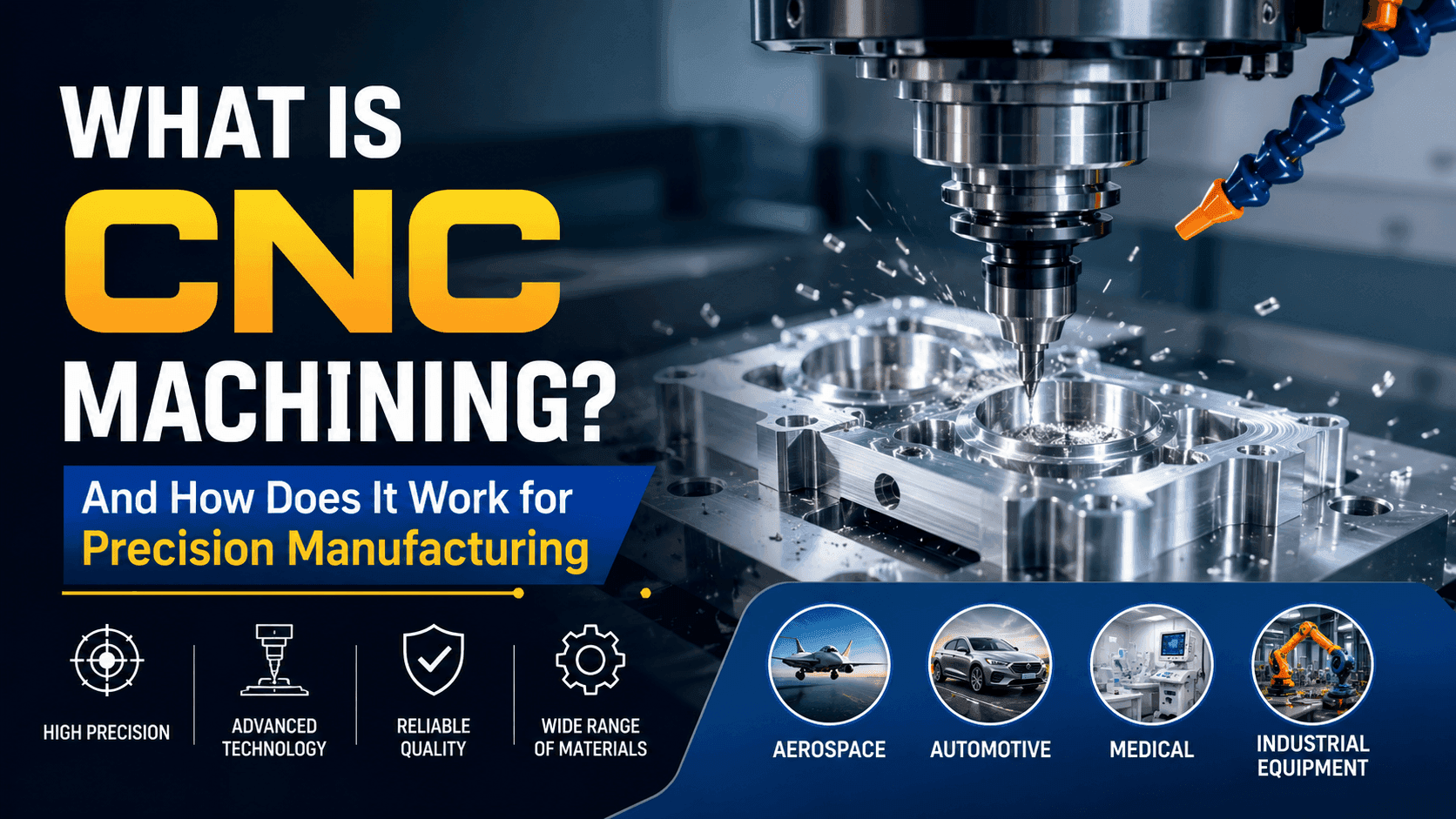
What Is CNC Machining and How Does It Work for Precision Manufacturing?
2026-08-27Learn what CNC machining is, how CNC milling and turning work, common materials, tolerances, and how to choose a precision CNC machining supplier.

Get in Touch With us
Helping customers grow steadily and achieve win-win development

Your trusted partner for CNC machining, sheet metal fabrication, stamping, and assembly. From prototyping to mass production with strict quality control.
tel:
0769-82763299
Mobile:
+86 18988716988
fax:
0769-82763199
Address:
No.3 Longze Road, Chang'an Town, Dongguan City, Guangdong Province, China,523861


Copyright © 2008-2026 | Dongguan Longwang Hardware Co., Ltd. | All Rights Reserved.


