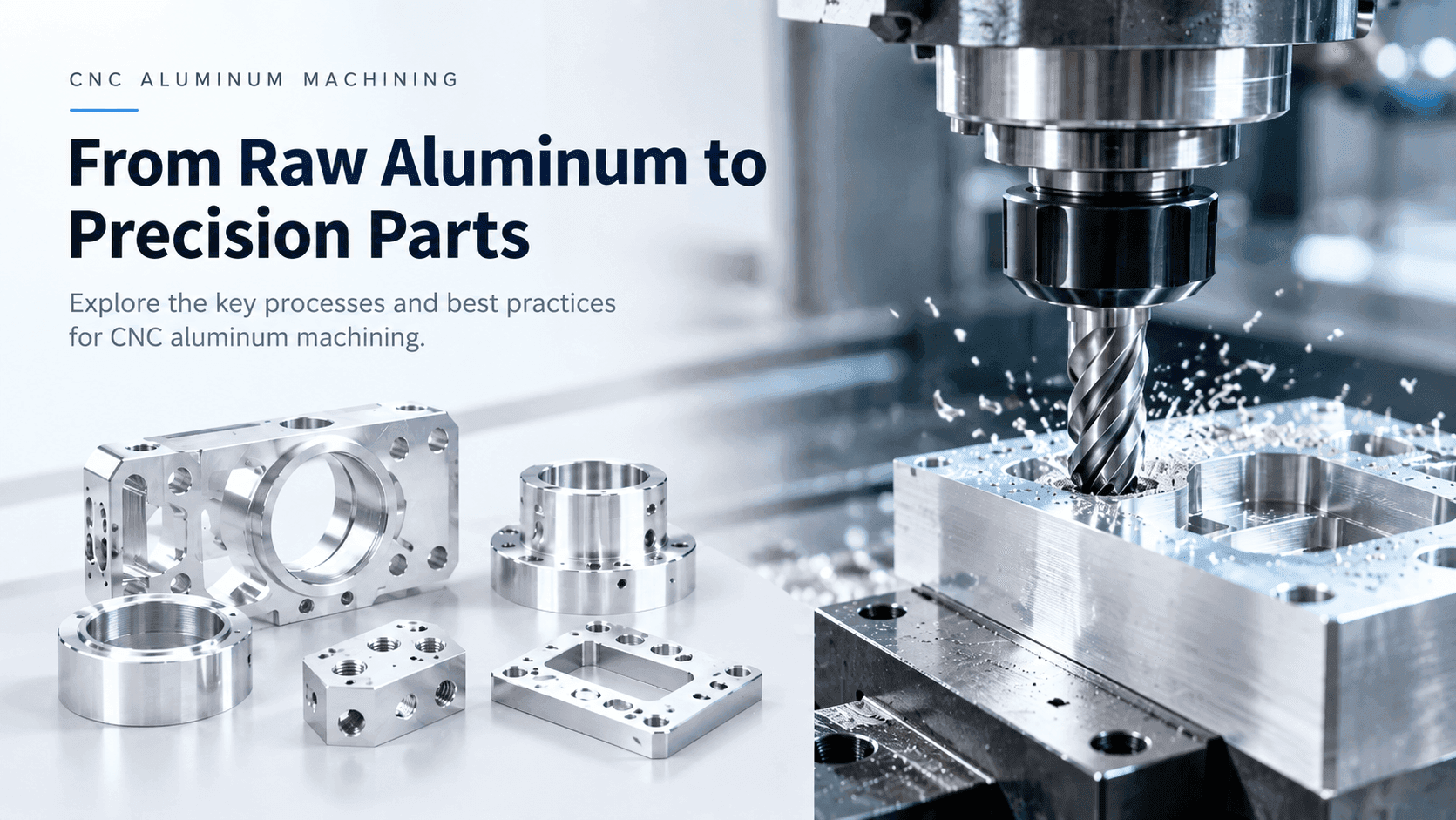
Aluminum alloy parts are widely used in electronics, automotive components, industrial equipment, aerospace, robotics, and consumer products because aluminum offers a useful combination of low weight, strength, machinability, and corrosion resistance. For precision components, however, choosing the right machining method is just as important as choosing the alloy. CNC milling, CNC turning, drilling, tapping, and surface finishing each serve different manufacturing needs.
In practice, aluminum alloy processing can include casting, extrusion, forging, and CNC machining. This article focuses on the CNC machining methods most relevant to custom precision parts, while also explaining how material selection, part design, and post-processing affect the final result.
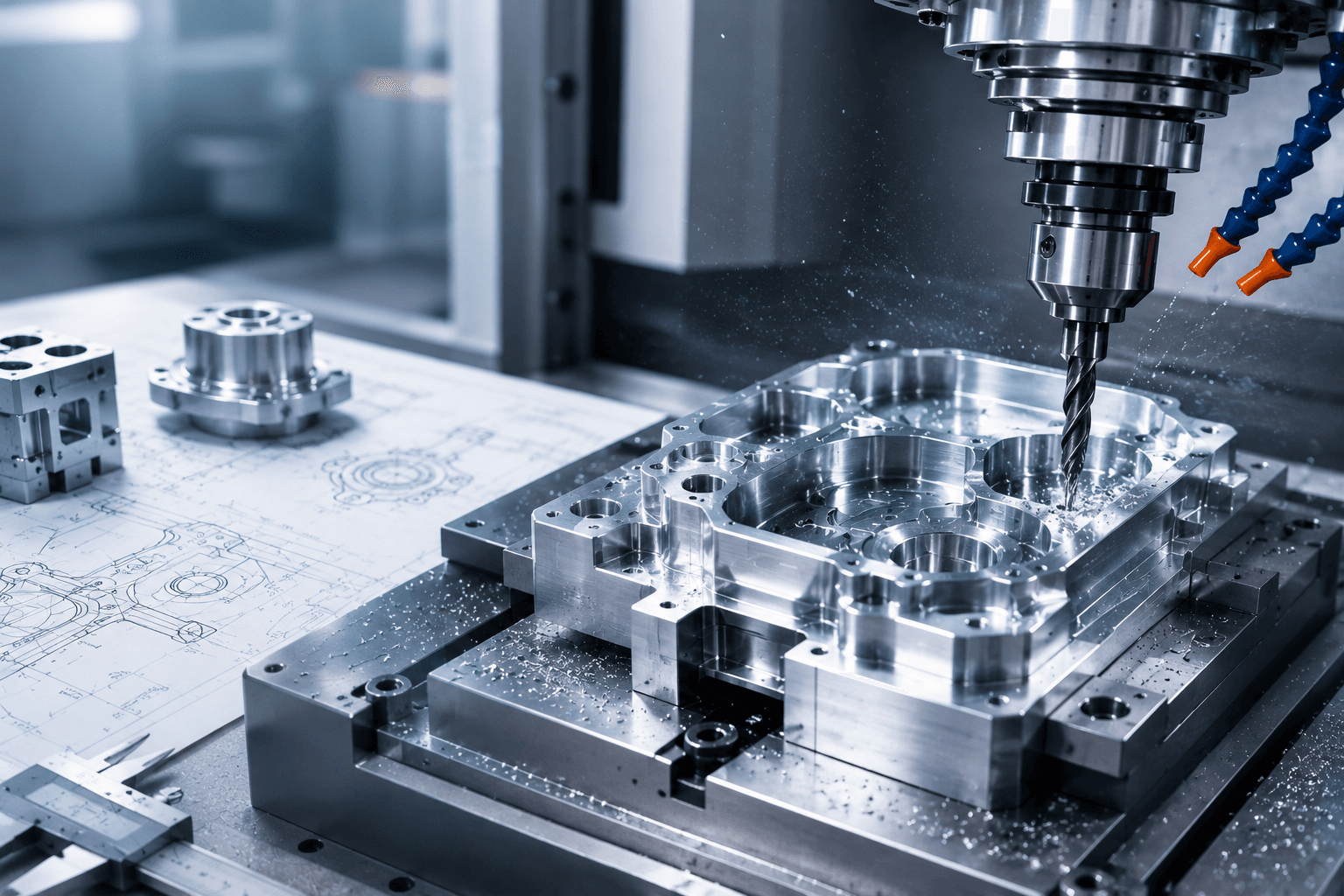
CNC milling is one of the most common methods for producing aluminum alloy parts. A CNC milling machine uses rotating cutting tools to remove material from a solid workpiece and create features such as pockets, slots, holes, steps, contours, and complex 3D surfaces. For aluminum components, 3-axis, 4-axis, and 5-axis machining can be selected according to part geometry and production requirements. 3-axis machining is suitable for many standard parts, while 4-axis and 5-axis machining can reduce setups and improve access to multiple surfaces on more complex components.
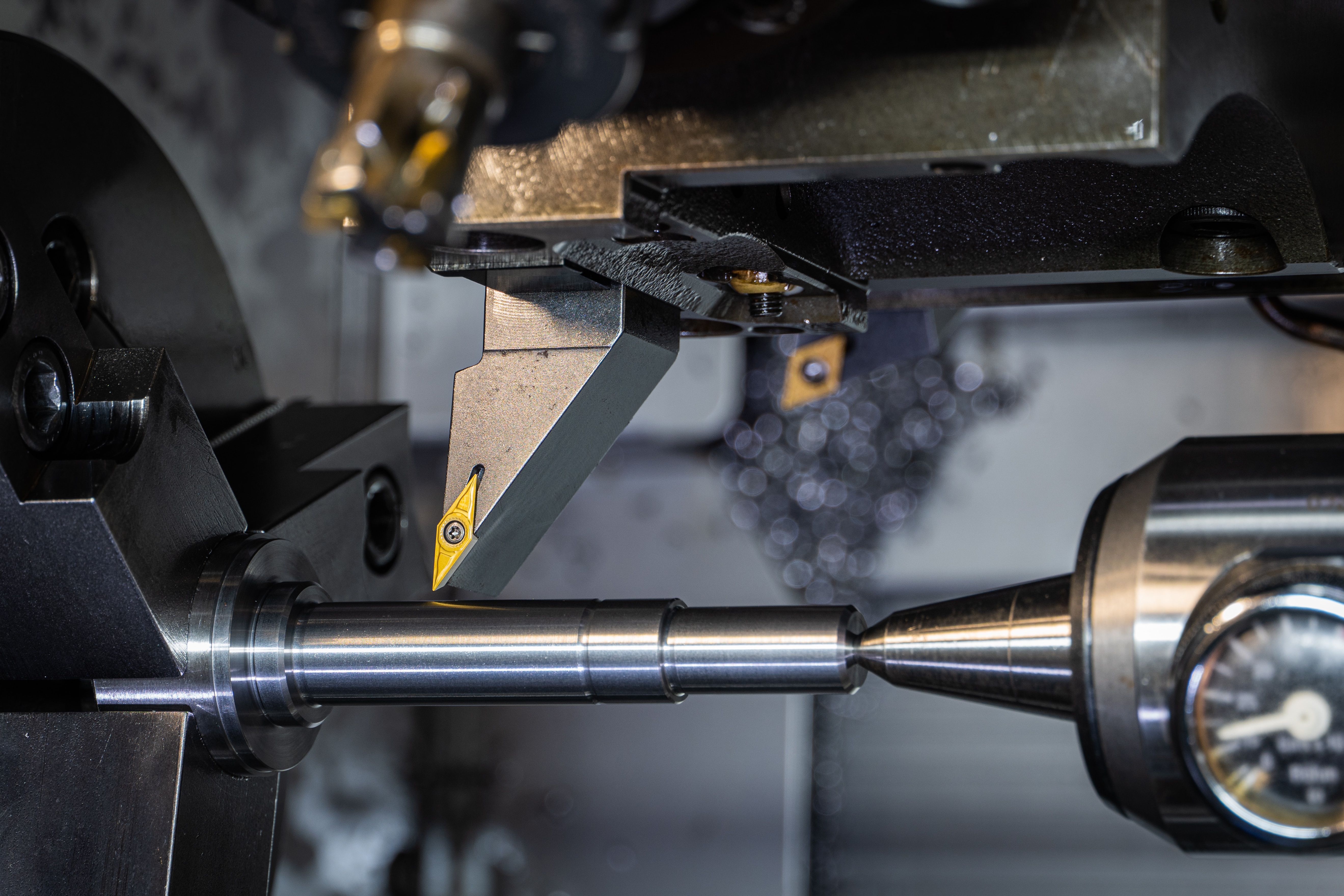
CNC turning is mainly used for cylindrical or rotational parts. During turning, the workpiece rotates while a cutting tool removes material to create outside diameters, inside diameters, grooves, threads, tapers, and other rotational features. Typical aluminum turning applications include shafts, bushings, pins, spacers, connectors, fittings, and precision sleeves. When a component combines rotational and milled features, CNC turning can be combined with live tooling or subsequent milling operations to reduce handling and improve consistency.
Many aluminum parts require more than basic milling or turning. Drilling creates accurate holes, while tapping produces internal threads for fasteners and assembly. Reaming, countersinking, and counterboring may also be used when tighter hole requirements or specific fastener interfaces are needed. Tool selection, cutting parameters, chip evacuation, and lubrication are particularly important when machining aluminum. Proper process control helps reduce burrs, tool adhesion, dimensional variation, and damage to finished surfaces.
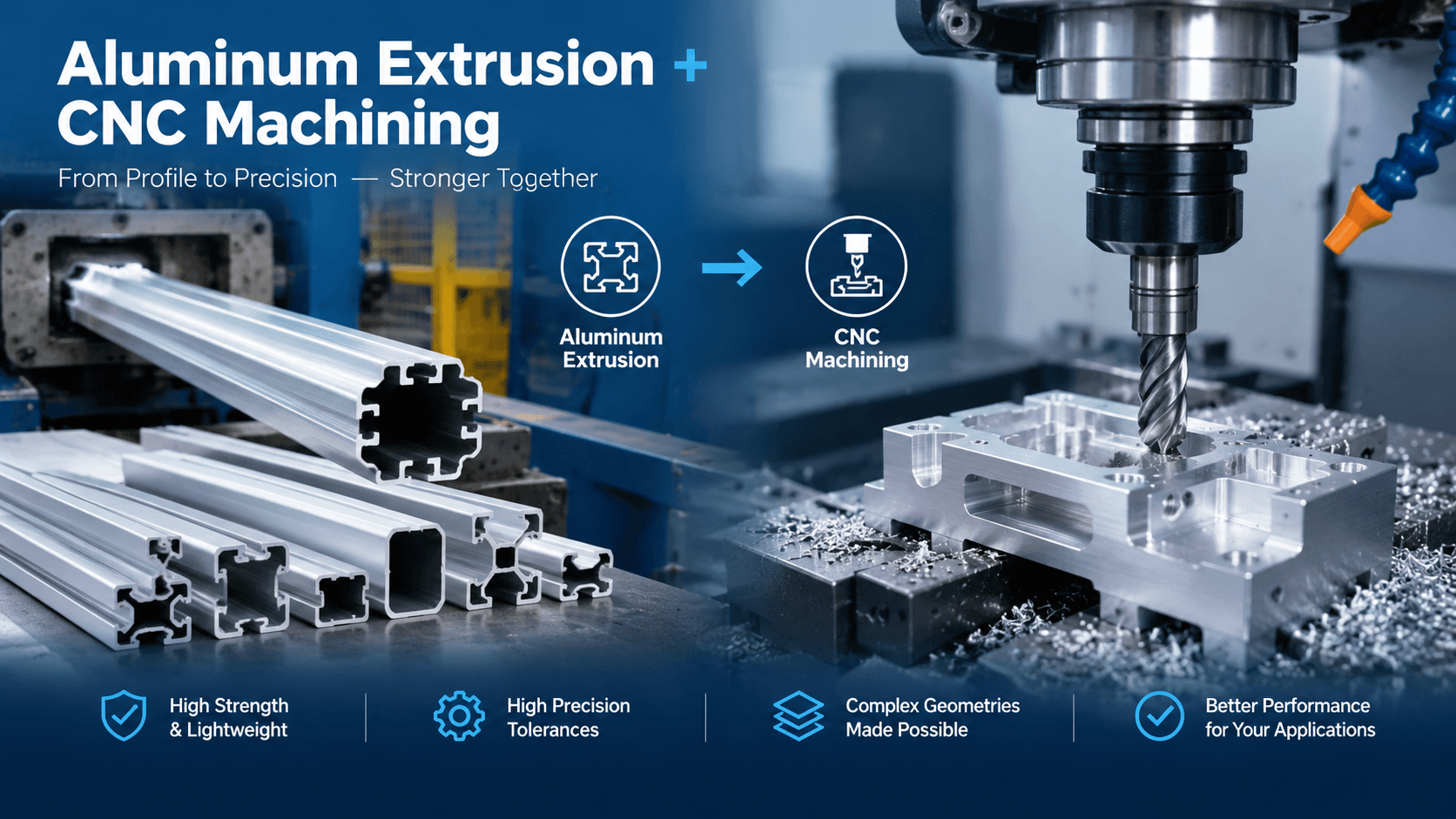
For parts with a consistent cross-sectional profile, aluminum extrusion can be an efficient way to produce the initial shape. The extruded profile can then be cut and CNC machined to add holes, slots, pockets, threads, mounting surfaces, and other precision features. This approach can reduce material waste and machining time compared with producing the entire component from a solid billet. It is especially useful for brackets, housings, frames, rails, and structural profiles with repeated cross-sections.
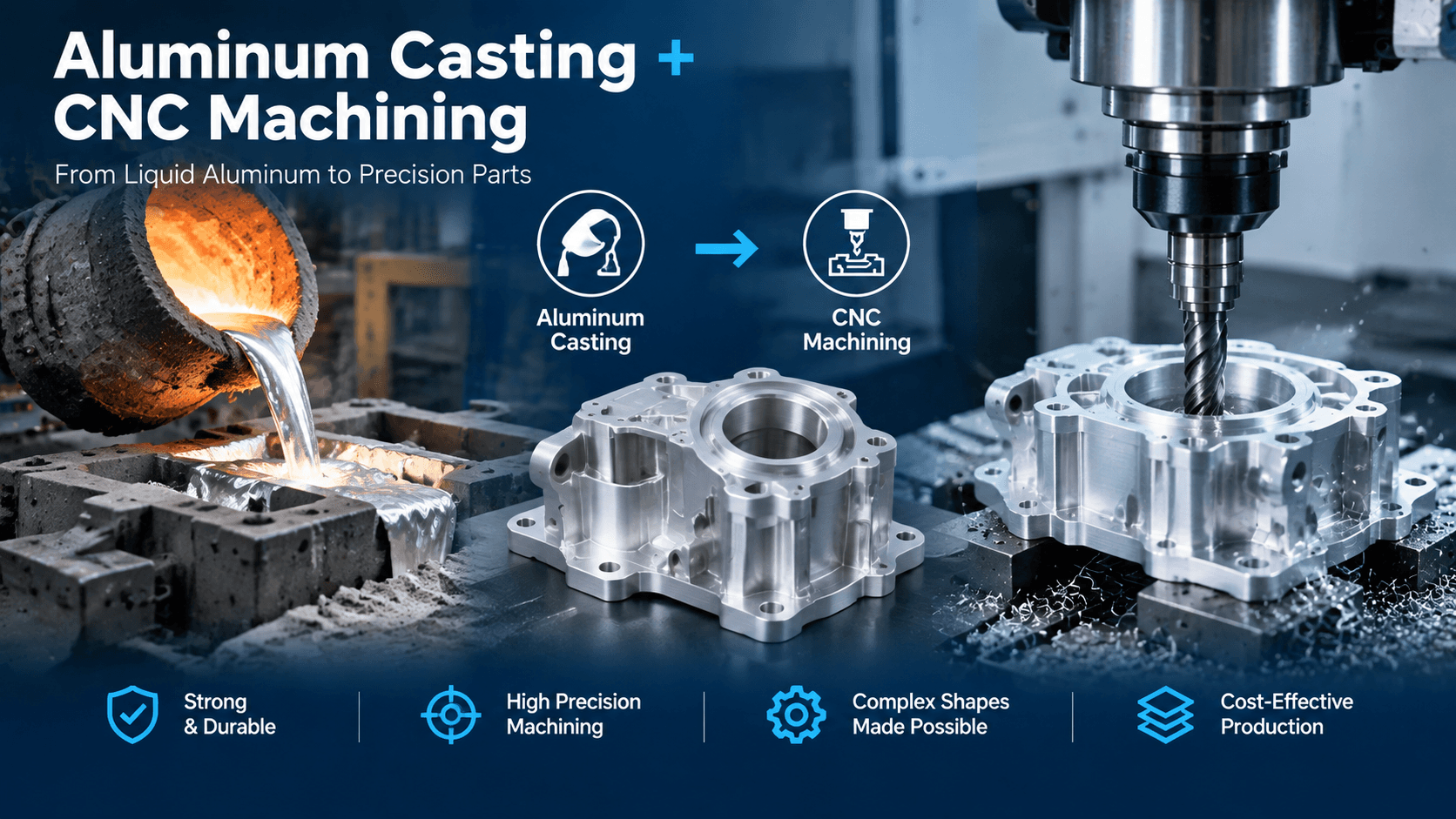
Casting can be used to create near-net-shape aluminum components with complex external geometry. After casting, CNC machining is often used to finish critical dimensions, mounting surfaces, holes, threads, and other functional features. The combination of casting and CNC machining can be effective for components that would require substantial material removal if manufactured entirely from billet. The appropriate process depends on geometry, production volume, dimensional requirements, and surface specifications.
CNC machining creates the required geometry, but many aluminum parts also need a surface treatment for appearance, wear resistance, corrosion protection, or functional performance. Common options include anodizing, powder coating, chemical conversion coating, polishing, bead blasting, and other finishing processes. Anodizing is especially common for aluminum because it can improve surface hardness and corrosion resistance while providing a range of appearance options. The selected finish should be considered early because coating thickness, masking requirements, and dimensional changes can affect critical features.
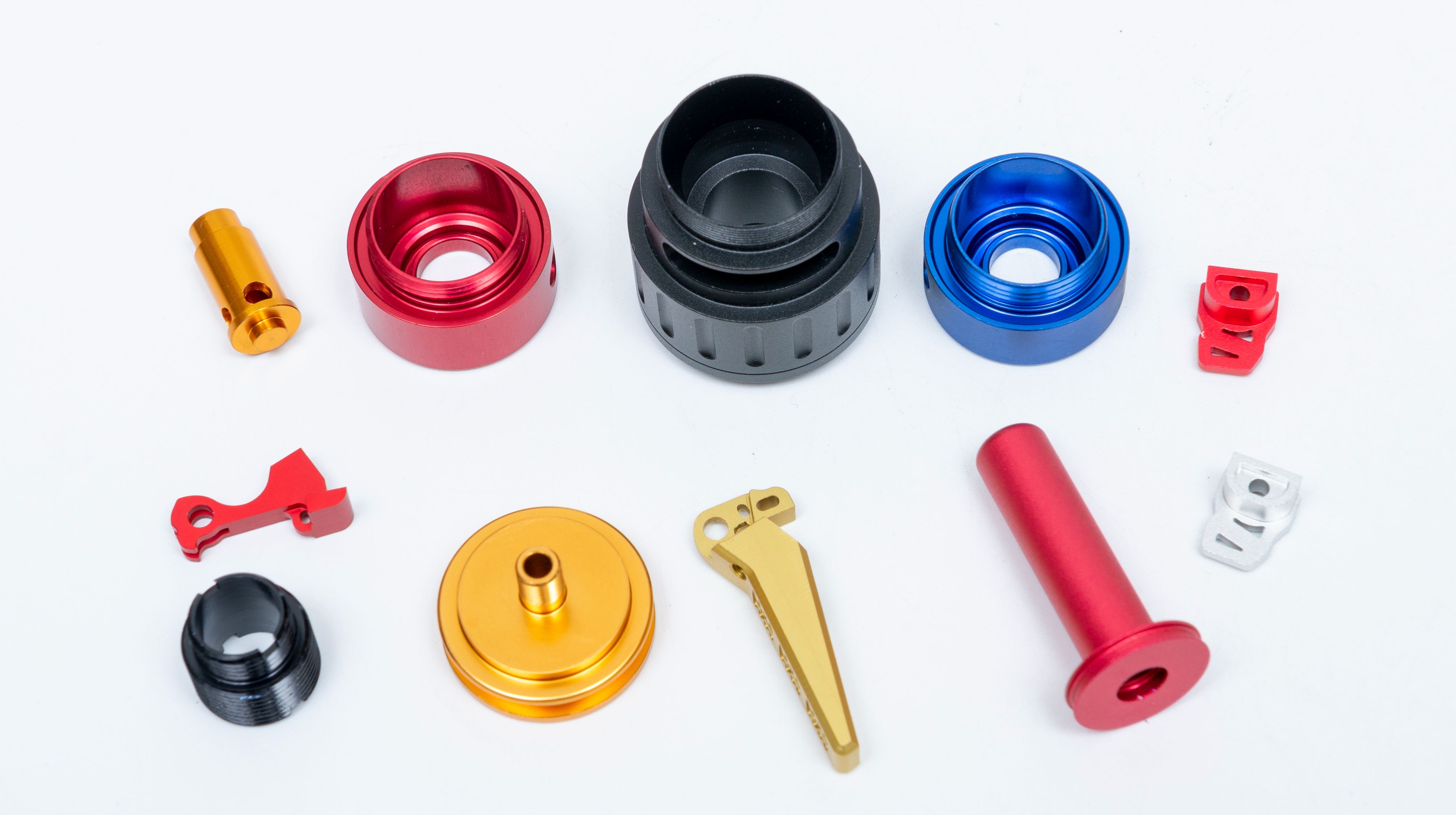
Different alloys offer different combinations of machinability, strength, corrosion resistance, and surface-finishing performance. The alloy should match the functional requirements of the part.
Large differences in wall thickness can create manufacturing challenges, especially for cast or thin-walled components. Uniform and practical wall thicknesses generally make production more stable.
Avoid unnecessarily deep pockets, difficult internal corners, and features that require excessive tool reach. A machining-friendly design can reduce cycle time and improve consistency.
Complex parts may require multiple setups. Datum design and accessible clamping surfaces should be considered during the design stage to help maintain positional accuracy.
Aluminum can produce burrs during drilling, milling, and tapping. Clearly defined deburring and edge-break requirements help ensure the part is ready for assembly.
Anodizing, coating, blasting, or polishing can affect appearance and dimensions. Critical surfaces and threads may require masking or post-treatment inspection.
Appropriate spindle speed, feed rate, depth of cut, and coolant or lubrication help manage heat, chip evacuation, tool life, and surface quality.
For larger production runs, automated loading, probing, tool management, and process monitoring can improve productivity and reduce operator-dependent variation.
Clean packaging and suitable protection help prevent scratches, contamination, and surface damage after machining and finishing.
CMM inspection, optical measurement, gauges, and other inspection tools can be selected according to drawing requirements and tolerance levels.
For custom aluminum parts, machining is only one stage of the manufacturing process. A supplier that can coordinate material sourcing, CNC machining, surface finishing, inspection, assembly, and logistics can reduce communication gaps and simplify project management.
For buyers, the most important questions are not only whether a supplier owns CNC machines, but whether the supplier can understand drawings, review designs for manufacturability, control critical dimensions, manage secondary processes, and deliver consistent parts from prototype to production.
CNC milling is one of the most widely used methods because it can produce holes, pockets, slots, contours, and complex surfaces. CNC turning is preferred for primarily cylindrical components.
The best alloy depends on the application. Common choices include 6061 and 7075, while other grades may be selected for specific strength, corrosion, or finishing requirements.
Yes. Extrusion can create the basic profile, followed by CNC machining for precision holes, pockets, threads, and mounting features.
Not always. Surface treatment depends on the required appearance, corrosion resistance, wear resistance, and application environment.
Designing for machining, reducing unnecessary setups, selecting practical tolerances, and choosing an appropriate material and finishing process can help control manufacturing cost.
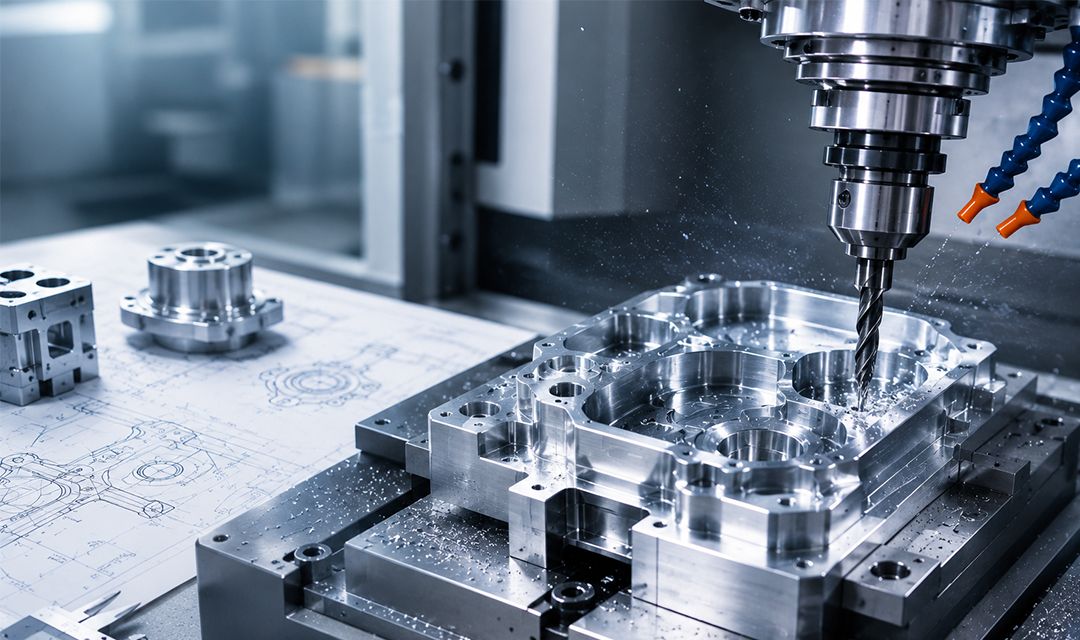
CNC aluminum machining is not limited to a single process. Milling, turning, drilling, tapping, extrusion, casting, and surface finishing can be combined to produce precision components with the required geometry, tolerance, appearance, and functional performance. The right manufacturing route depends on part design, material, volume, tolerance, and end-use requirements.
For projects that require custom aluminum parts, working with an integrated machining supplier can simplify the transition from drawing and prototype to finished production. Longwang provides CNC machining, sheet metal fabrication, surface finishing, assembly, and related manufacturing support for custom precision components.
Next

How Rising Copper Prices Affect CNC Machining Costs in 2026
2026-09-11Learn how rising copper and brass prices affect CNC machining costs and how better material selection and process optimization can reduce expenses.
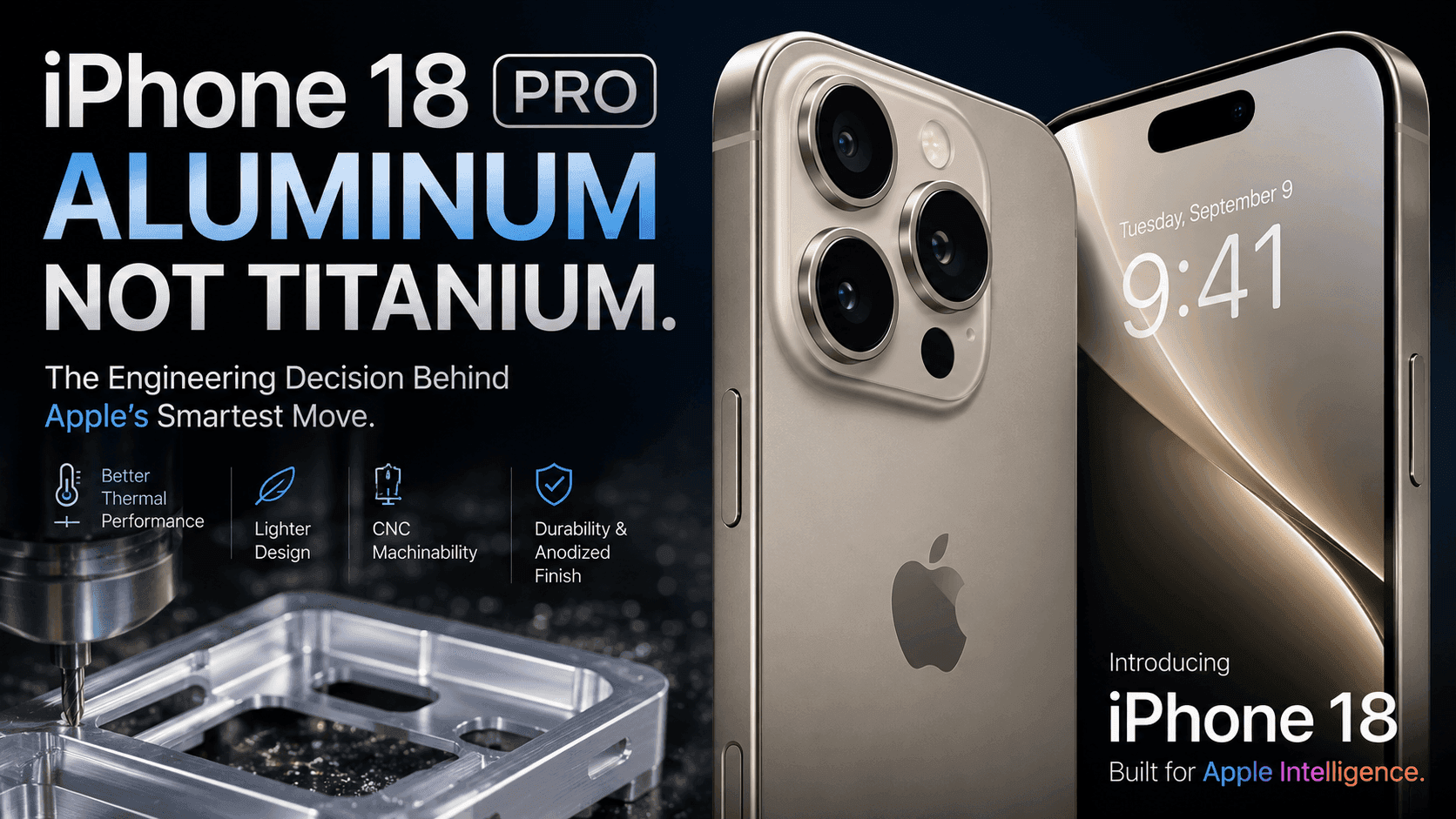
iPhone 18 Pro Frame: Why Apple Chose Aluminum Over Titanium
2026-09-10Discover why Apple chose an aluminum frame for the iPhone 18 Pro instead of titanium. Explore the engineering benefits of aluminum, including thermal performance, lightweight design, CNC machinability, anodizing, durability, and high-volume manufacturing. Learn what the iPhone 18 Pro frame reveals about modern CNC machining and precision aluminum manufacturing.

Get in Touch With us
Helping customers grow steadily and achieve win-win development

Your trusted partner for CNC machining, sheet metal fabrication, stamping, and assembly. From prototyping to mass production with strict quality control.
tel:
0769-82763299
Mobile:
+86 18988716988
fax:
0769-82763199
Address:
No.3 Longze Road, Chang'an Town, Dongguan City, Guangdong Province, China,523861


Copyright © 2008-2026 | Dongguan Longwang Hardware Co., Ltd. | All Rights Reserved.


