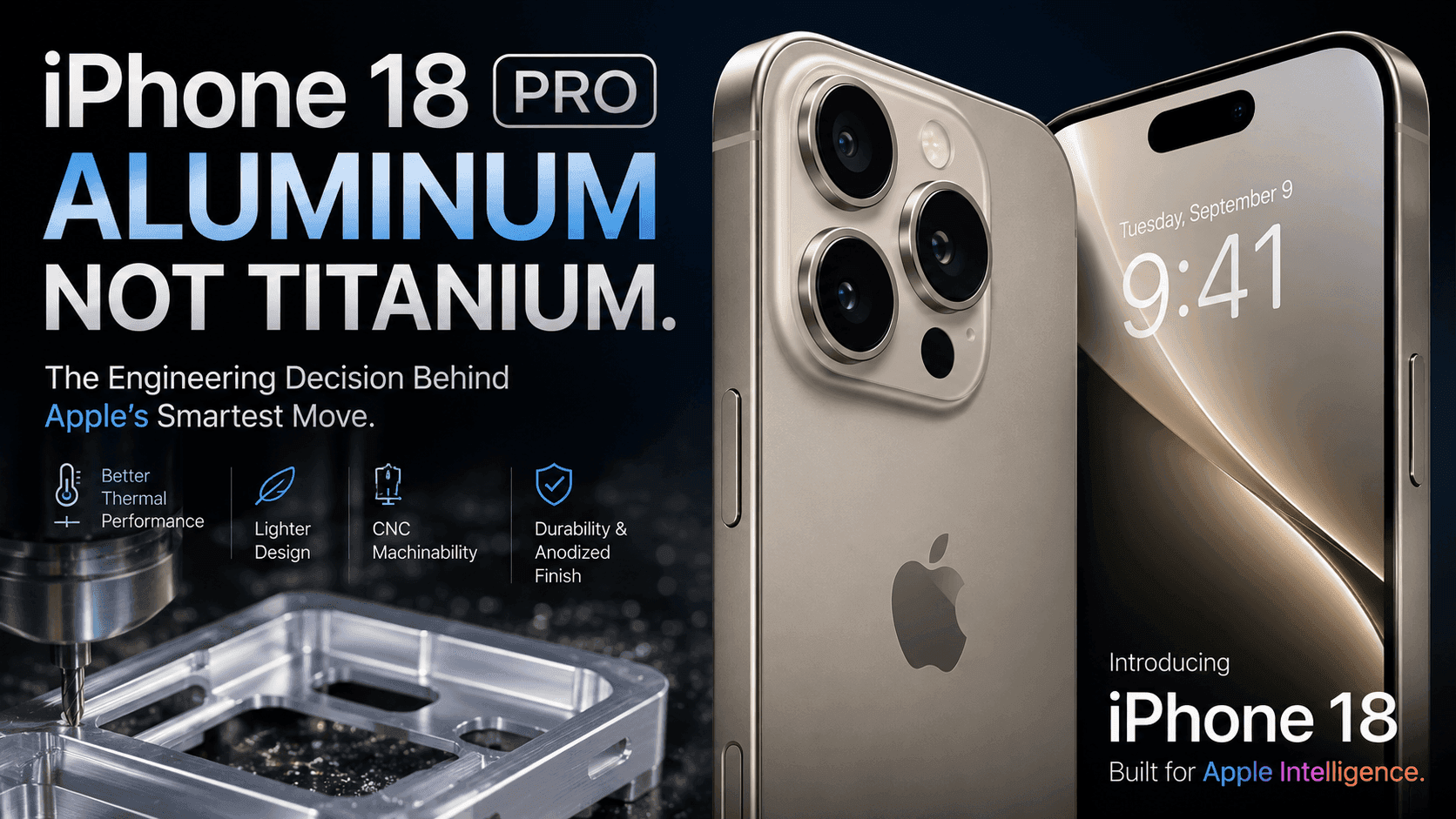
Apple has made its choice clear: the iPhone 18 Pro and iPhone 18 Pro Max use an aluminum unibody design, not titanium.
At first glance, that may seem surprising. Apple introduced titanium as a defining feature of its Pro lineup with the iPhone 15 Pro and continued with the iPhone 16 Pro. Titanium offered a strong, lightweight structure and became closely associated with Apple’s premium iPhone design.
So why return to aluminum?
The answer goes beyond weight or appearance. The iPhone 18 Pro combines its aluminum unibody with a completely redesigned thermal management system. Apple says the new vapor chamber has three times the surface area of the previous generation and, together with new thermally conductive materials, enables up to 40% better sustained performance than the iPhone 17 Pro.
This makes the iPhone 18 Pro’s material choice particularly interesting from an engineering and manufacturing perspective.
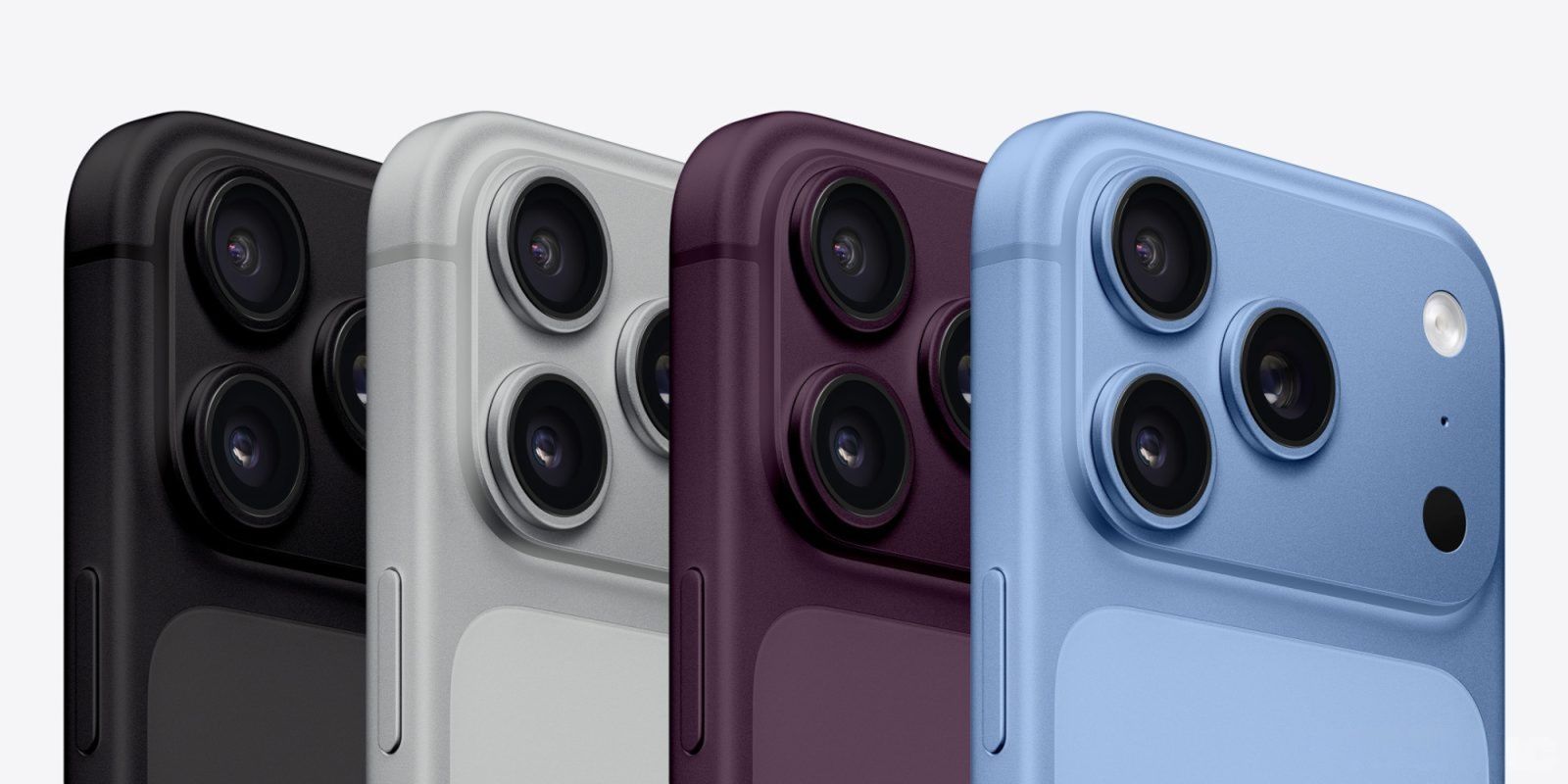
Titanium remains an impressive engineering material.
It has an excellent strength-to-weight ratio, strong corrosion resistance, and a premium appearance. Apple highlighted these characteristics when it introduced the titanium iPhone 15 Pro, describing the material as strong and lightweight.
But material selection is rarely about strength alone.
A smartphone frame has to support the display and internal components, contribute to thermal management, remain lightweight, provide precise mounting surfaces, and be manufactured consistently at extremely high volumes.
This is where aluminum becomes particularly attractive.
Aluminum generally offers much higher thermal conductivity than titanium. It is also widely used in precision machining because of its relatively good machinability and low density.
Apple has not stated that thermal conductivity alone was the reason it moved away from titanium. However, the company’s emphasis on the iPhone 18 Pro’s new thermal architecture makes it clear that heat management has become a major engineering priority.
The material choice therefore makes sense as part of a larger system.
Apple is not simply choosing aluminum instead of titanium. It is choosing a material that fits the performance requirements of the entire device.
Today’s smartphones are effectively compact computers. The iPhone 18 Pro introduces the A20 Pro chip, which Apple says is built using a 2-nanometer process and includes major improvements in CPU, GPU, memory bandwidth, and on-device AI processing. More demanding workloads naturally make thermal management increasingly important.
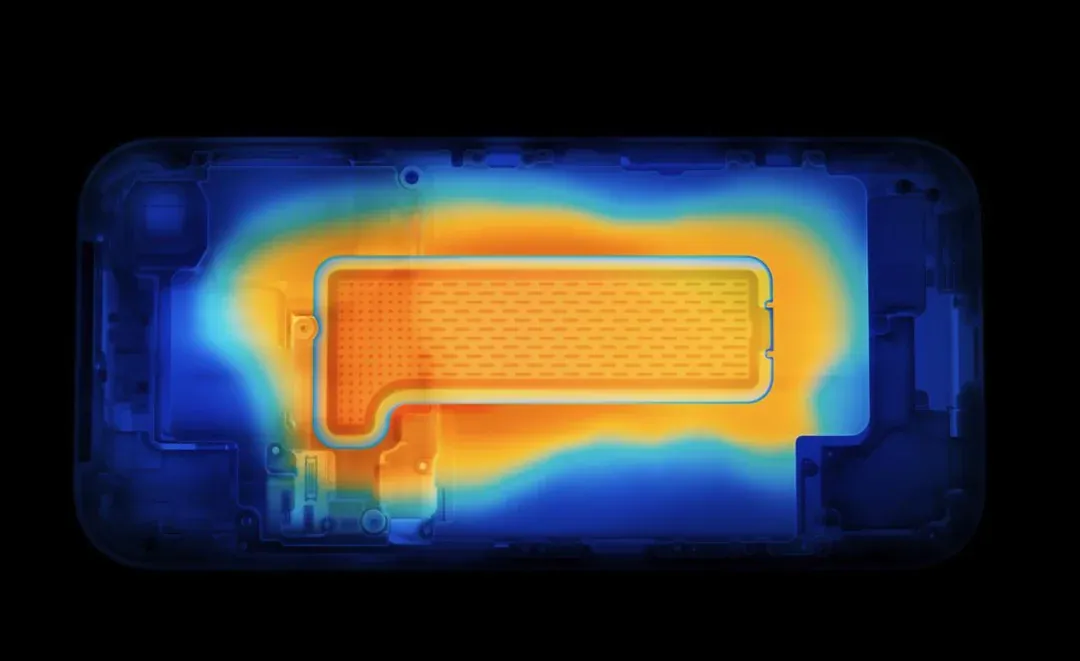
Apple’s response is not limited to the frame. The A20 Pro is paired with a next-generation vapor chamber. Apple says the new design has three times more surface area than the previous generation on the iPhone 17 Pro and can deliver up to a 40% improvement in sustained performance.
This is an important point.
A material cannot be evaluated independently from the thermal system around it. The frame, internal components, vapor chamber, processor, battery, and structural design all need to work together.
Aluminum’s thermal properties make it a natural candidate for a device where heat dissipation and sustained performance are becoming increasingly important.
There is another major advantage: machinability.
Aluminum alloys are widely used in CNC machining because they can be processed efficiently at high cutting speeds while allowing manufacturers to produce complex geometries with relatively short cycle times.
For a precision smartphone enclosure or structural component, machining may involve:
Producing these features consistently requires more than simply removing material from an aluminum block.
Tool selection, cutting parameters, workholding, machining sequence, vibration control, burr removal, dimensional inspection, and surface preparation all influence the final result.
Titanium can also be precision machined, of course. However, its lower thermal conductivity and machining characteristics generally require more demanding process control and can contribute to higher tool wear.
For high-volume consumer electronics, manufacturing efficiency matters. This is one reason aluminum can offer a compelling balance between performance, machinability, weight, and production efficiency.
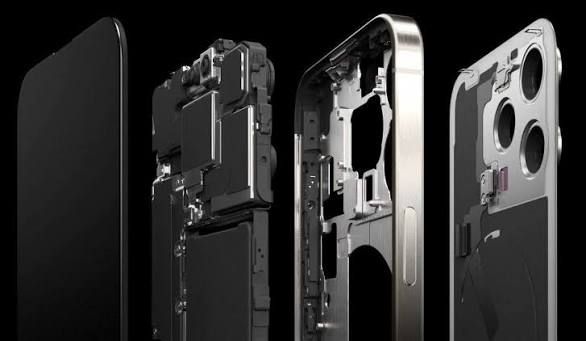
A precision aluminum component is only as good as the manufacturing process behind it. A typical high-precision workflow may involve:
Each stage can affect the next.
For example, machining strategy influences surface quality. Surface quality affects finishing. Finishing can affect dimensions and appearance. Inspection then has to verify that the final component still meets the required specifications.
This becomes especially important for complex aluminum structures with thin walls and tight tolerances.
For CNC manufacturers, the challenge is therefore not simply achieving a dimensional tolerance on a drawing.
It is maintaining repeatability throughout the entire manufacturing process.
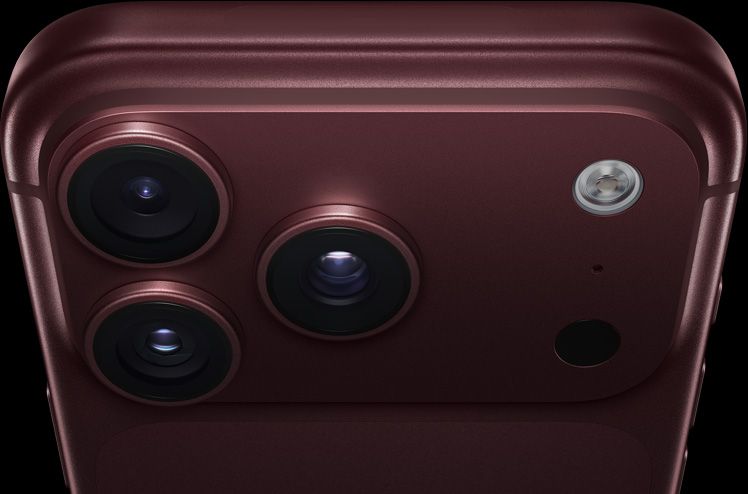
Apple officially describes the iPhone 18 Pro and iPhone 18 Pro Max as having an aluminum unibody design, with Ceramic Shield 2 on the front and Ceramic Shield on the back. Apple does not publicly disclose every manufacturing parameter or surface-treatment specification.
That distinction is important.
Anodizing is widely used for aluminum components because it can improve surface properties while providing controlled color and appearance. However, it would be inaccurate to claim that Apple has publicly disclosed every anodizing parameter used for the iPhone 18 Pro. From a manufacturing perspective, this still highlights an important principle: surface finishing is part of precision manufacturing, not simply a cosmetic final step.
Surface roughness, edge conditions, cleaning, dimensional changes, film characteristics, and handling can all affect the final component.
For a premium consumer product, appearance and dimensional performance have to be controlled together.
The iPhone 18 Pro is a useful example of how advanced consumer electronics are closely connected to precision manufacturing. Material selection, structural design, CNC machining, thermal management, surface treatment, and inspection cannot be treated as completely separate processes. They have to work together.
For CNC manufacturers, this is particularly relevant when producing aluminum housings, electronic equipment components, precision structural parts, and other customized metal components.
At Longwang, we provide precision CNC machining and integrated metal manufacturing services for customized components, including aluminum parts, electronic equipment components, structural parts, and other non-standard metal products.
From material selection and machining to surface treatment and inspection, every manufacturing decision can influence the final result.

As smartphones become more powerful and on-device AI becomes more demanding, thermal management and sustained performance are becoming increasingly important. At the same time, manufacturers need materials that support precise, repeatable, and efficient production.
Aluminum offers a strong combination of low weight, thermal performance, machinability, and manufacturing efficiency.
Titanium still has clear advantages, but the iPhone 18 Pro demonstrates an important engineering principle: The strongest material is not always the best material. The best material is the one that provides the right balance between performance, manufacturing, durability, sustainability, and the final application.
And behind every sleek aluminum smartphone frame is a manufacturing process where precision matters just as much as the material itself.
Next
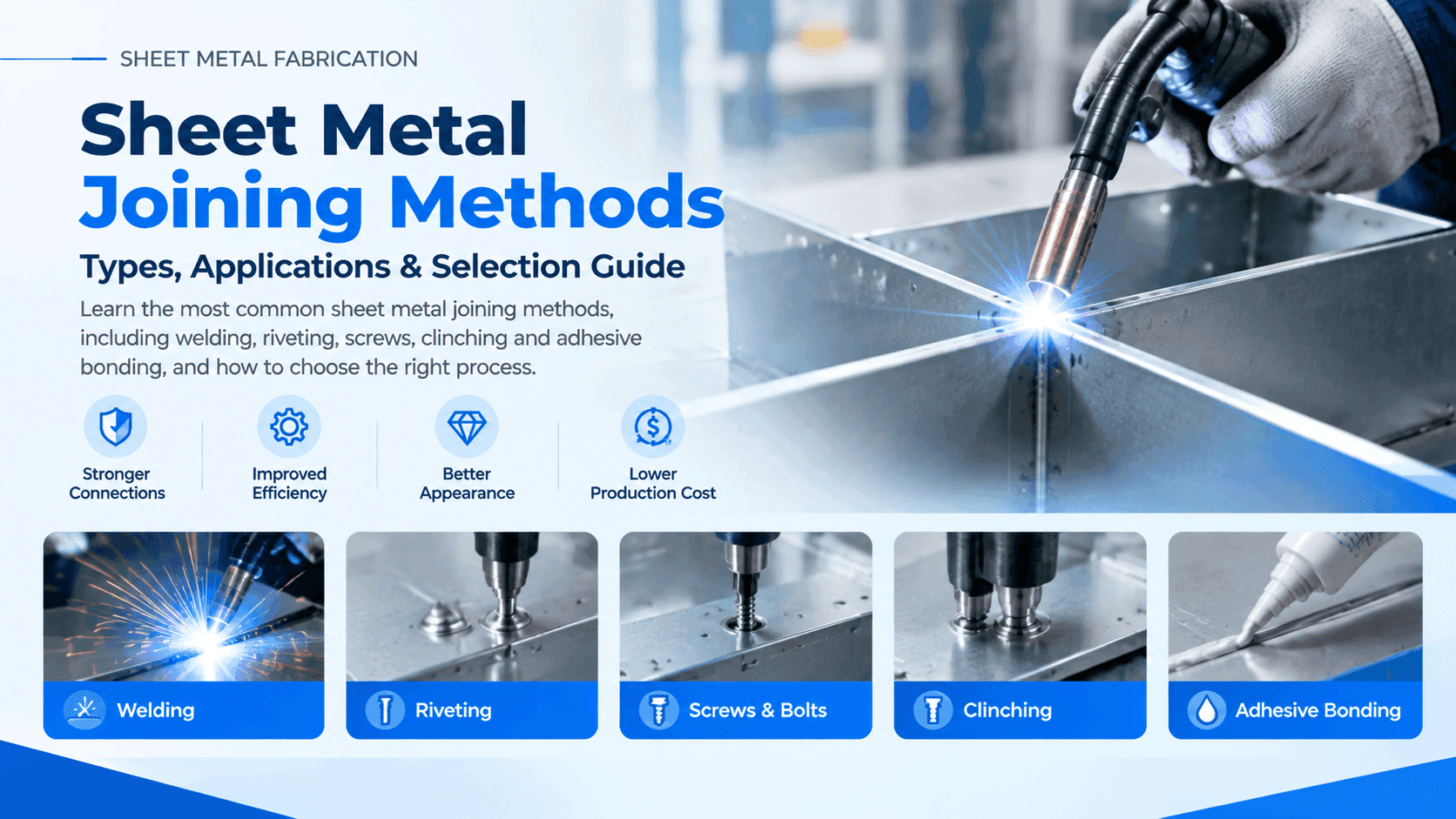
Sheet Metal Joining Methods: How to Choose the Right Process for Your Parts
2026-09-09Learn the most common sheet metal joining methods, including welding, riveting, screws, clinching and adhesive bonding, and how to choose the right process.
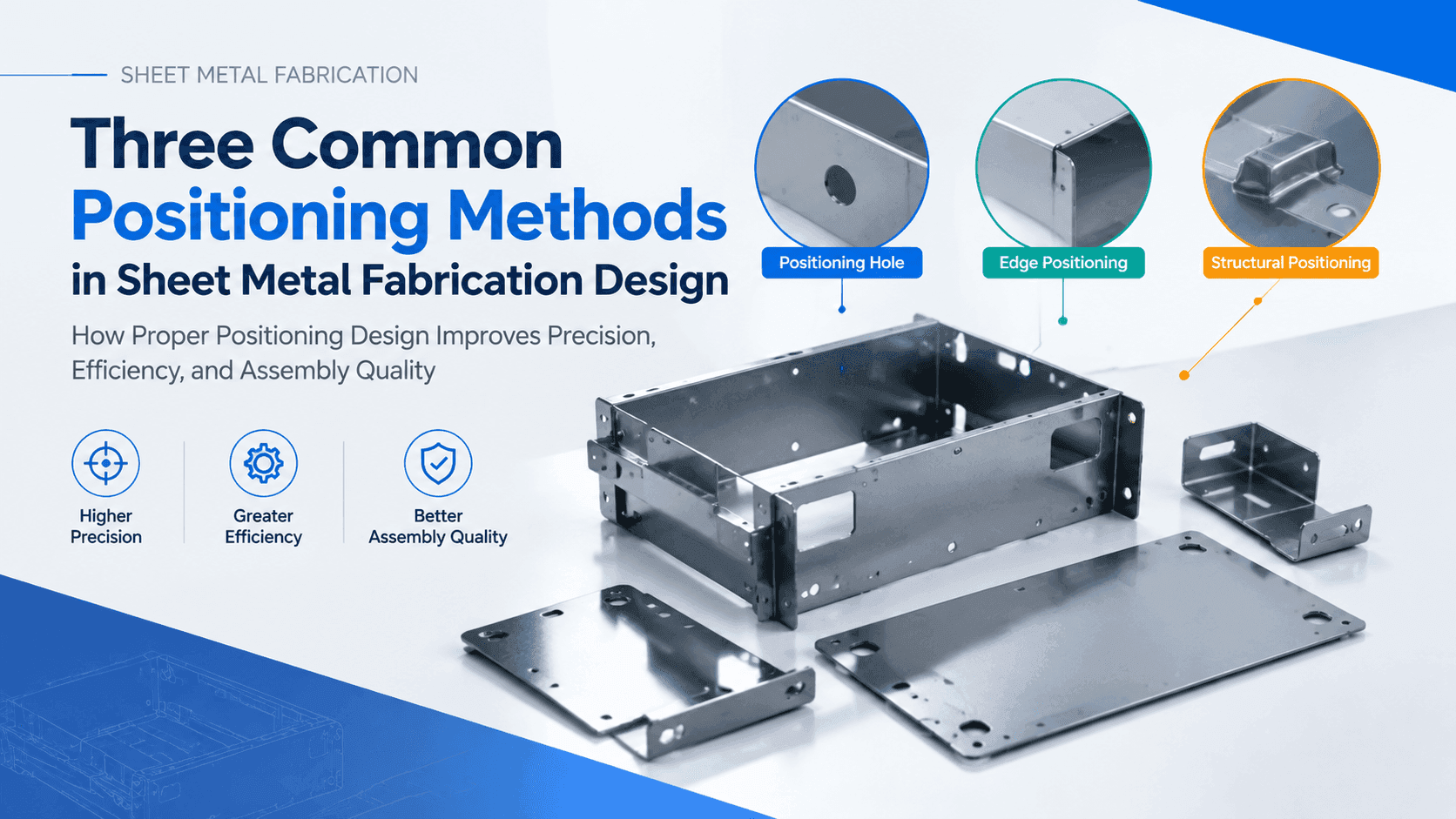
Three Common Positioning Methods in Sheet Metal Fabrication Design
2026-09-08Learn three common positioning methods in sheet metal fabrication design, including positioning holes, edge positioning, and structural positioning features to improve manufacturing accuracy and assembly efficiency.

Get in Touch With us
Helping customers grow steadily and achieve win-win development

Your trusted partner for CNC machining, sheet metal fabrication, stamping, and assembly. From prototyping to mass production with strict quality control.
tel:
0769-82763299
Mobile:
+86 18988716988
fax:
0769-82763199
Address:
No.3 Longze Road, Chang'an Town, Dongguan City, Guangdong Province, China,523861


Copyright © 2008-2026 | Dongguan Longwang Hardware Co., Ltd. | All Rights Reserved.


