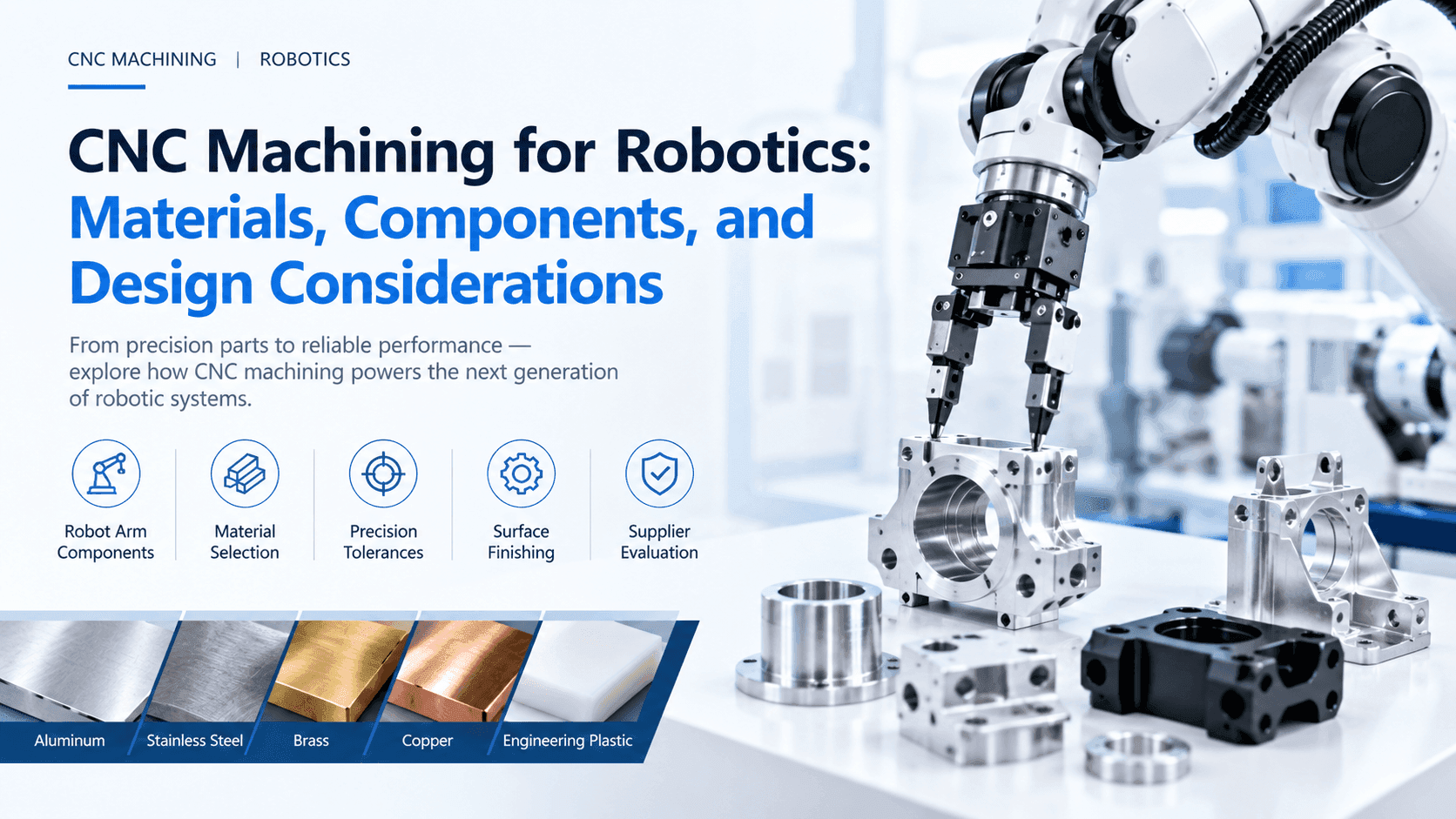
Robotic systems rely on precision components for accurate movement, reliable positioning, and consistent performance. From robotic arm joints and motor mounts to sensor housings and end-of-arm tooling, many critical parts require the dimensional accuracy and design flexibility that only CNC machining can provide.
CNC machining for robotics allows manufacturers to produce custom metal components with controlled dimensions, complex geometries, and functional surface finishes. However, successful production involves more than selecting a machine. Material properties, tolerances, part geometry, and assembly requirements must work together.
This guide explains the main CNC machined robot parts, how to select suitable materials, and what engineers should consider when designing components for robotic applications.
CNC milling and turning are suitable for manufacturing a wide range of robotic components, particularly parts that require precise interfaces, custom geometries, or consistent repeatability. Common applications include:
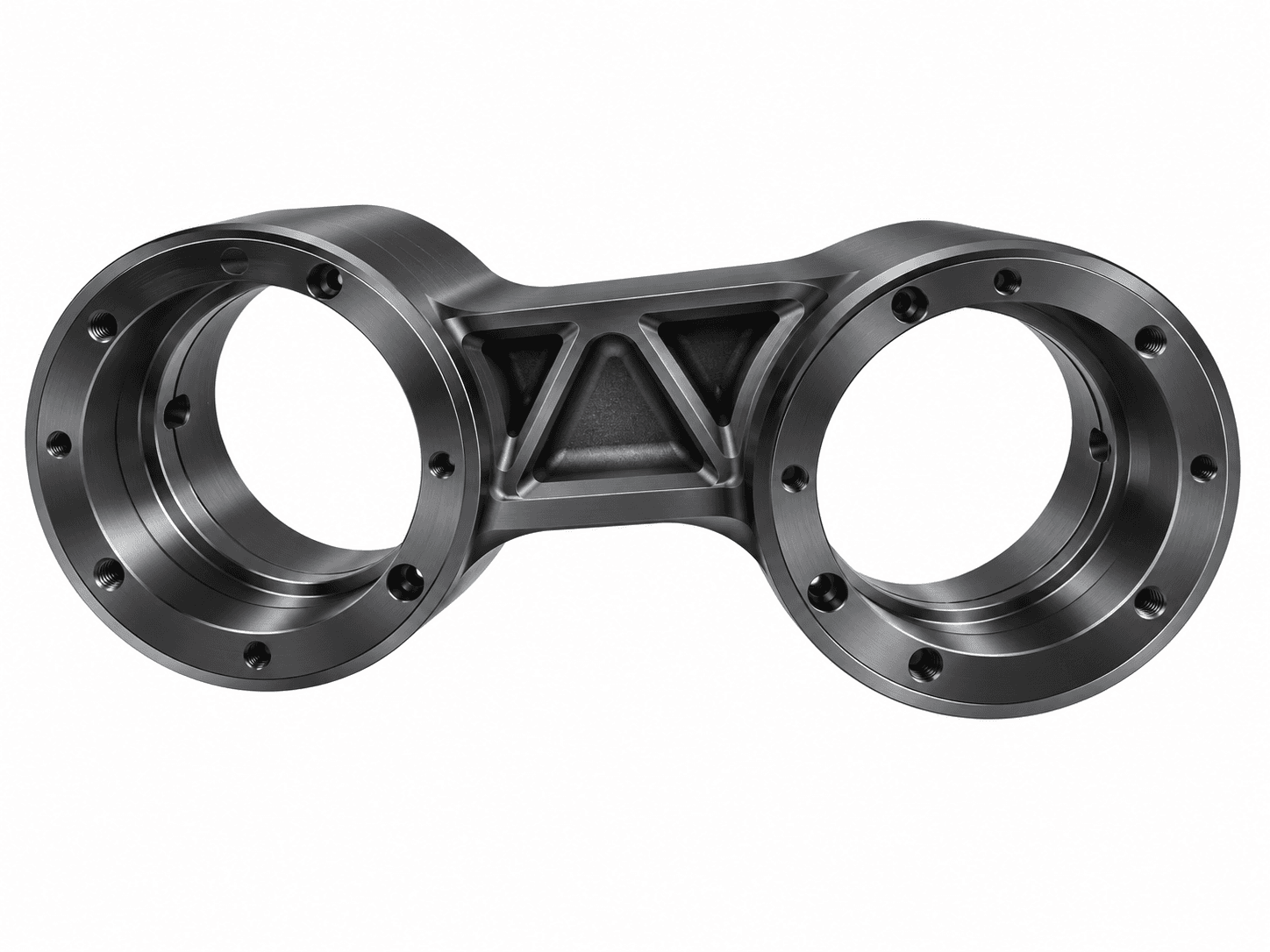
Robot arms use brackets, structural links, mounting plates, and connecting blocks to support loads and transfer motion. These components must balance stiffness, weight, and dimensional accuracy. Aluminum alloys are often considered for lightweight structures, while steel may be appropriate for heavily loaded interfaces.
Joint housings and motor mounts connect motors, gearboxes, bearings, and structural members. Their hole positions, mounting faces, and bearing seats influence alignment and mechanical performance.
CNC machining can produce these features in a single setup when the machine configuration and part geometry allow, reducing the need for repeated repositioning.
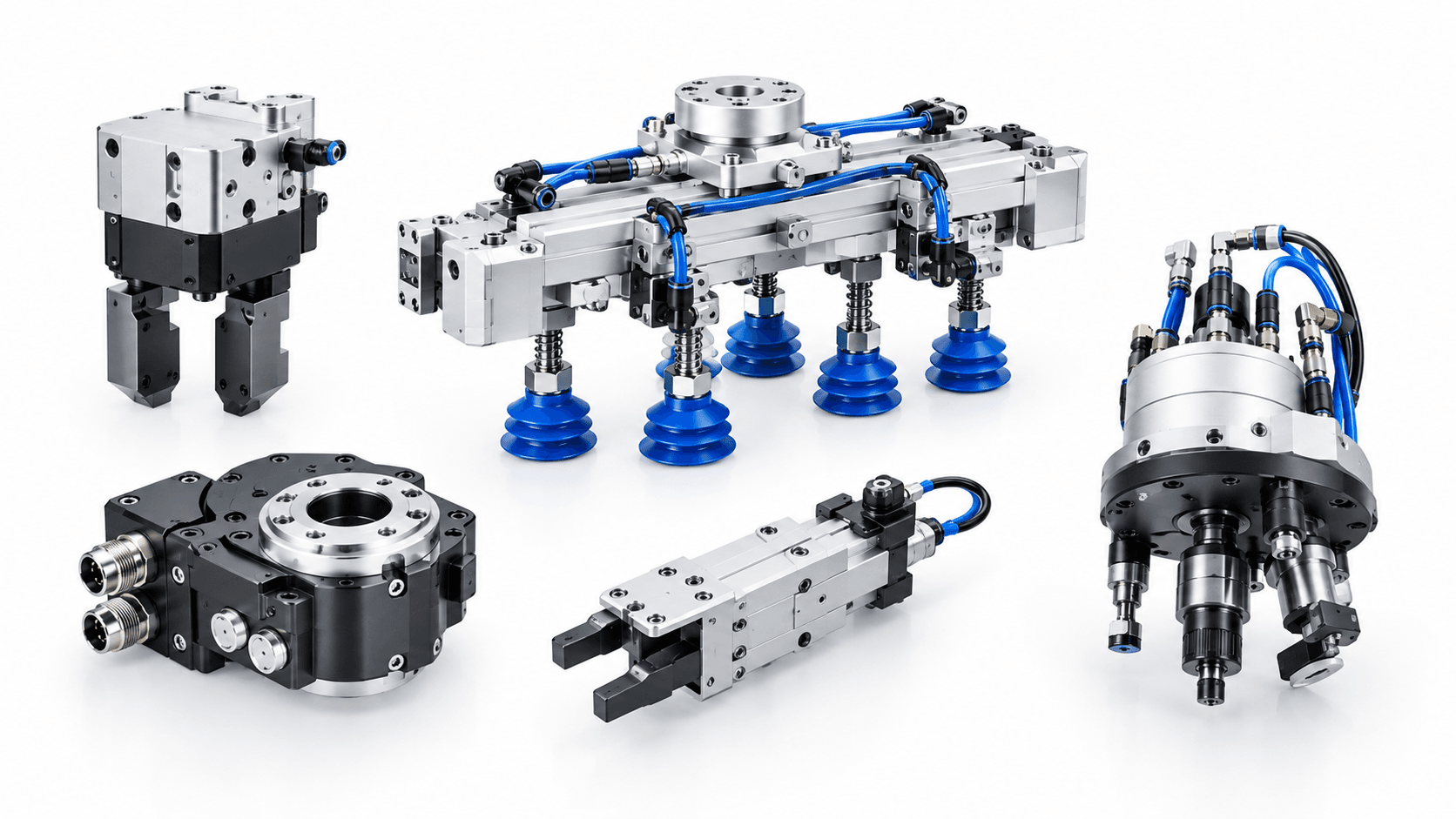
Grippers, adapter plates, vacuum-tool mounts, and custom fixtures often require application-specific designs. CNC machining is useful when tooling must fit a particular robot, product, or production process.
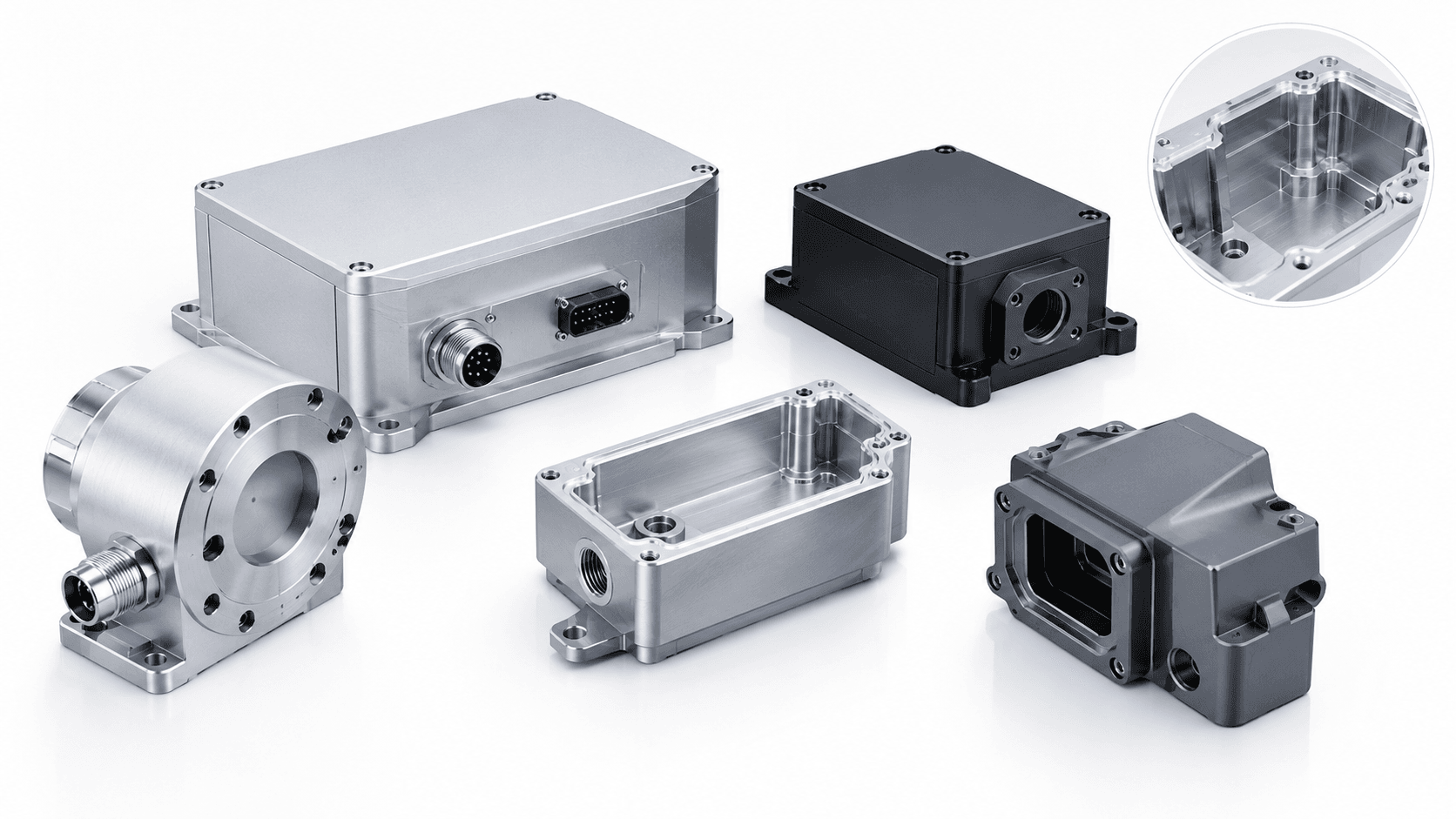
Robotic systems use cameras, proximity sensors, encoders, and other electronic devices. Machined housings and mounting brackets help position these components accurately and protect them from the surrounding environment.
CNC turning is suitable for shafts, spacers, bushings, and cylindrical connectors used in rotating or sliding assemblies. Where several operations are required, milling and turning can be combined to produce more complex parts.
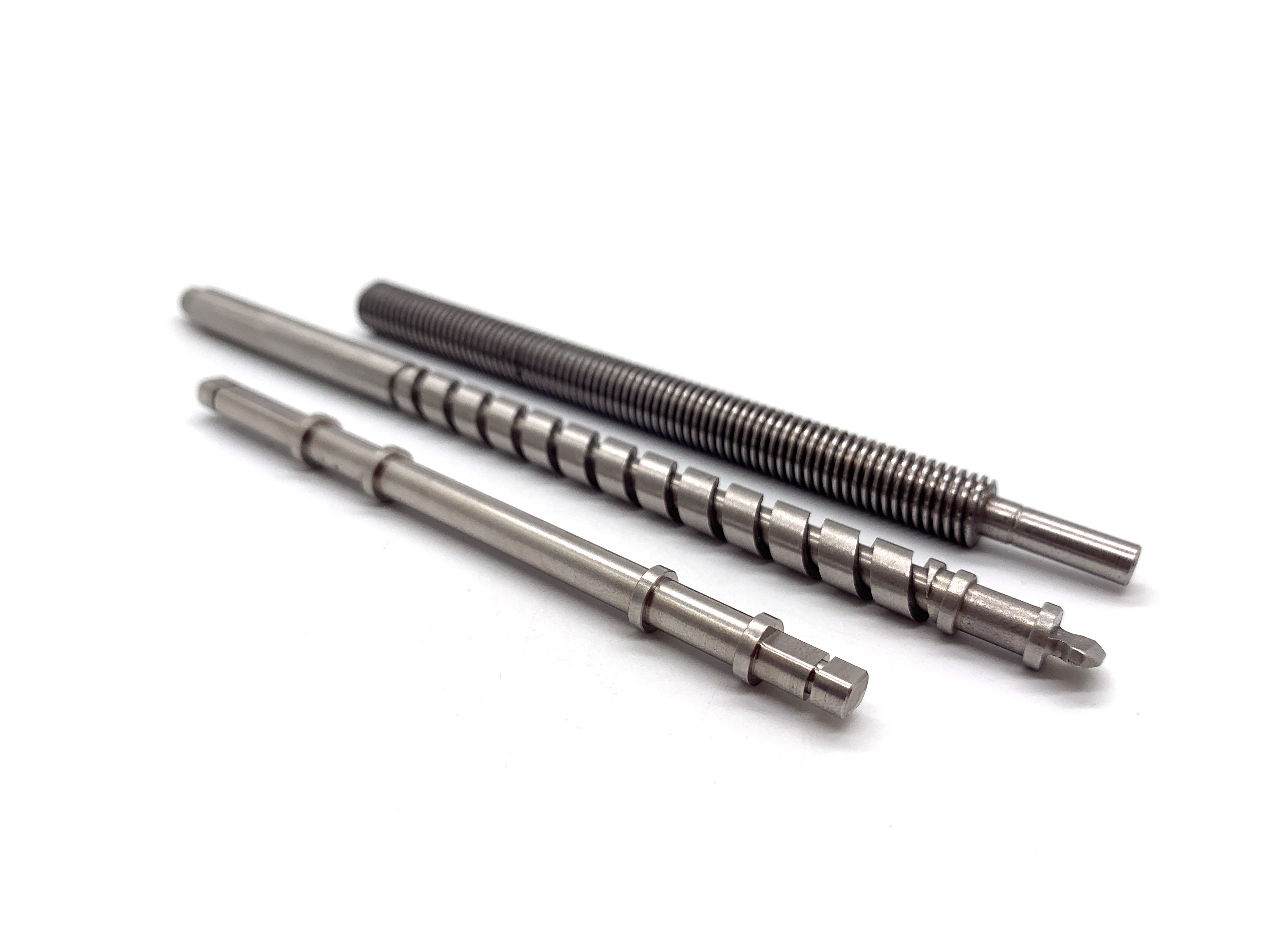
The appropriate process depends on the component's geometry, tolerance requirements, production volume, and functional purpose.
Material selection affects component weight, rigidity, wear resistance, corrosion performance, and machining cost. The best choice depends on the robot's operating conditions rather than strength alone.
| Material | Main advantages | Typical robotic applications |
|---|---|---|
| Aluminum 6061-T6 | Lightweight, machinable, good corrosion resistance | Robot brackets, housing, mounting plates |
| Aluminum 7075-T6 | High strength-to-weight ratio | Lightweight structural links and highly loaded components |
| Stainless steel 304 | Corrosion resistance and durability | Fixtures, connectors, equipment components |
| Alloy steel 4140 | High strength and wear resistance, depending on treatment | Shaft, loaded mechanical interfaces |
| POM (Acetal) | Low friction and good dimensional stability | Bushings, guides, spacers |
Aluminum 6061-T6 has a typical density of approximately 2.70 g/cm³ and tensile strength around 310 MPa. Its machinability makes it a practical starting point for many robot brackets and housings.
Aluminum 7075-T6 has a density of approximately 2.81 g/cm³ and typical tensile strength around 570 MPa, depending on product form and specification. It may be appropriate when a component needs greater strength without a substantial weight increase, although its cost and corrosion-protection requirements should be considered.
Stainless steel is useful where corrosion resistance or durability is important. Alloy steel can provide higher strength for loaded mechanical components, but heat treatment and machining conditions influence its final properties.
Engineering plastics such as POM may be preferable for low-friction guides and bushings. However, creep, thermal expansion, and operating temperature must be evaluated when a plastic component carries a sustained load.
Practical recommendation: Select materials using the actual load cases, expected service life, environmental conditions, and weight limits. Avoid specifying a more expensive alloy unless its properties provide a meaningful engineering benefit.
Robotic mechanisms often contain several connected components. Small dimensional errors can accumulate across an assembly, affecting alignment, repeatability, and mechanical clearance. There are three factors that deserve particular attention.
Bearing seats, locating features, dowel holes, and motor mounting interfaces may require tighter tolerances than noncritical external surfaces. For example, a mounting bracket may use general tolerances on its outside profile but tighter positional control for the holes that locate a motor.
The required tolerance should be determined by the mating components and assembly function. Applying unnecessarily tight tolerances to every dimension increases machining and inspection costs without necessarily improving performance.
A lightweight part is not automatically a good robotic component. Thin walls and long unsupported sections may deflect under load or vibration. Engineers should evaluate wall thickness, support geometry, stress concentrations, and the direction of applied forces.
Adding ribs or increasing local thickness can improve stiffness, but these changes should also account for tool access and manufacturability.
Reducing moving mass can be valuable for robotic arms because it affects inertia and the loads experienced by motors and transmissions. Pocketing and lightweight geometries can reduce material usage, but excessive material removal may weaken critical sections or complicate machining.
The goal is to remove unnecessary material while preserving sufficient stiffness and strength for the intended duty cycle.
The manufacturing process should be selected according to the part's functional features.
Surface treatment must be considered before final dimensions are specified. For example,anodized changed the surface layer, and frequent rework during the machining process can affect the dimensions of holes and mating features. By the way, hard anodizing has a more significant impact on dimensions. Critical interfaces may require masking or dimensional allowances.
For assemblies involving bearing, sliding contacts, or precision fits, finishing requirements should be coordinated with the drawing and inspection plan.
Robotic components often combine complex geometry with demanding performance requirements. Several design decisions can help control cost without compromising function.
Simplify noncritical features.
Avoid unnecessarily deep pockets, extremely small internal radii, and thin walls that require specialized tools or additional finishing passes.
Specify functional tolerances only.
Identify the interfaces that control alignment, motion, or assembly. Use appropriate general tolerances elsewhere.
Choose machinable materials.
A suitable aluminum alloy may reduce machining time compared with a more difficult-to-machine material, provided it meets the structural and environmental requirements.
Reduce setup changes.
Arrange features to allow machining from fewer orientations when practical. Fewer setups can reduce handling time and alignment variation.
Plan production quantities early.
Programming and setup costs are spread across more parts in a production batch. However, the best quantity depends on demand, inventory risk, and design stability.
Before production, reviewing the CAD model and drawing can reveal opportunities to simplify manufacturing, reduce material waste, and improve inspection efficiency.
Choosing a supplier requires more than comparing unit prices. Engineers and purchasing teams should verify whether the manufacturer can consistently meet the component's technical requirements. You need to consider these questions:
For custom robotic parts, a supplier that can review drawings, identify manufacturing risks, and coordinate multiple processes can help simplify production and communication.
CNC machining for robotics supports the production of custom brackets, joint housings, shafts, sensor mounts, and other precision mechanical components. Successful results depend on balancing material properties, tolerances, structural rigidity, weight, and manufacturing cost.
For engineers, the most effective approach is to define the component's functional requirements first, then select materials and machining processes that meet those requirements without unnecessary complexity.
Longwang provides precision metal machining and integrated manufacturing services for custom components. By reviewing part geometry, material specifications, tolerances, surface finishing, and production quantities early, manufacturers and customers can identify practical solutions before production begins.
Developing a robotic component? Contact Longwang with your 2D drawing or 3D CAD file, material requirements, and expected order quantity to discuss manufacturability and request a quotation.
Next
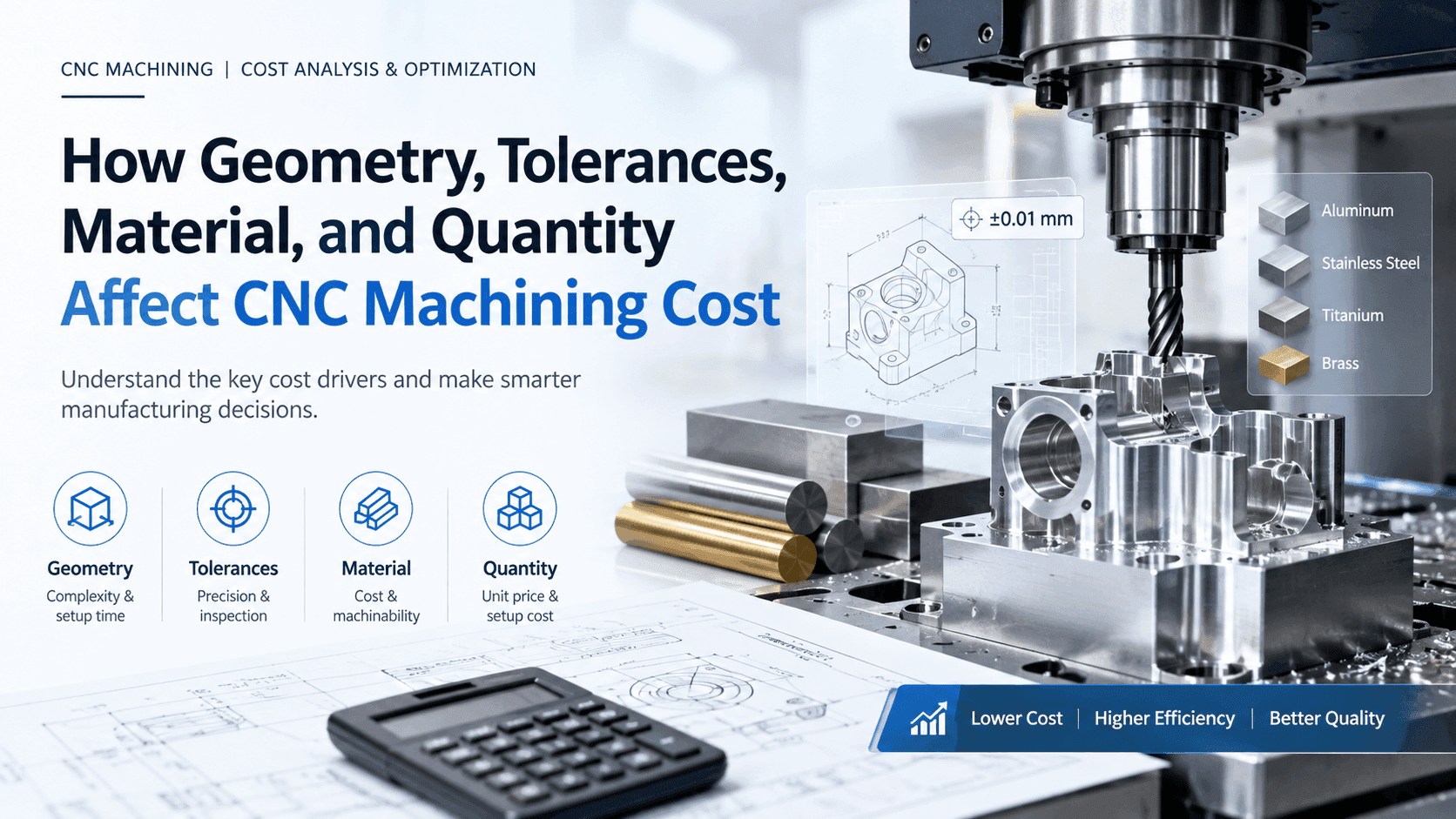
How Geometry,Tolerances,Material, and Quantity Affect CNC Machining Cost?
2026-10-14CNC machining cost depends on more than the price of raw materials or the hourly rate of a machine. Part geometry, dimensional tolerances, material properties, and order quantity all influence how a component is manufactured, inspected, and delivered.
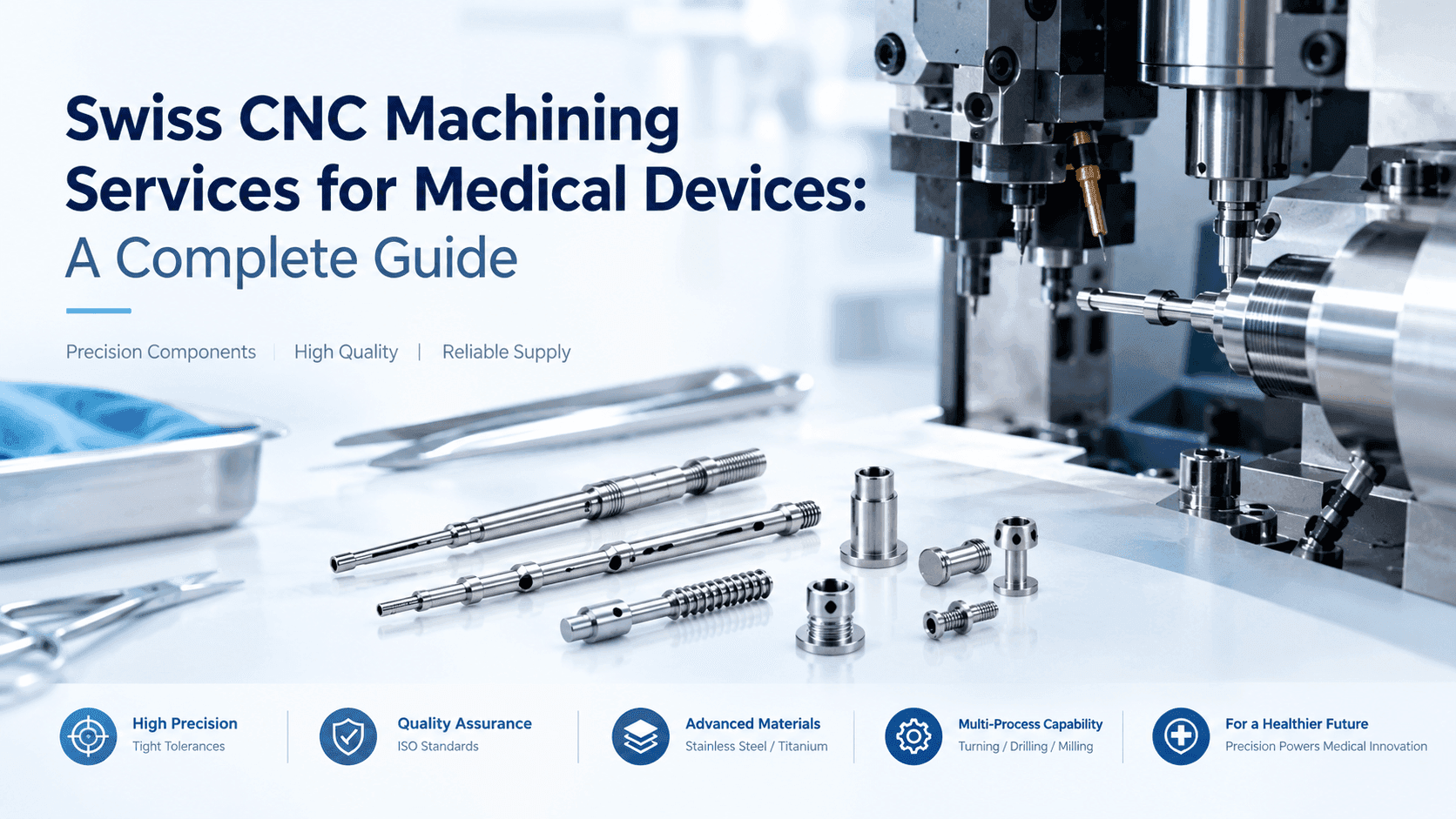
Swiss CNC Machining Services for Medical Devices: A Complete Guide
2026-10-09Medical device components often look simple on a drawing, but producing them consistently can be challenging. A small shaft may require several diameters, a narrow groove, a cross-hole, and a precisely controlled surface finish. When these features must fit together reliably, the choice of machining process becomes important.

Get in Touch With us
Helping customers grow steadily and achieve win-win development

Your trusted partner for CNC machining, sheet metal fabrication, stamping, and assembly. From prototyping to mass production with strict quality control.
tel:
0769-82763299
Mobile:
+86 18988716988
fax:
0769-82763199
Address:
No.3 Longze Road, Chang'an Town, Dongguan City, Guangdong Province, China,523861


Copyright © 2008-2026 | Dongguan Longwang Hardware Co., Ltd. | All Rights Reserved.


