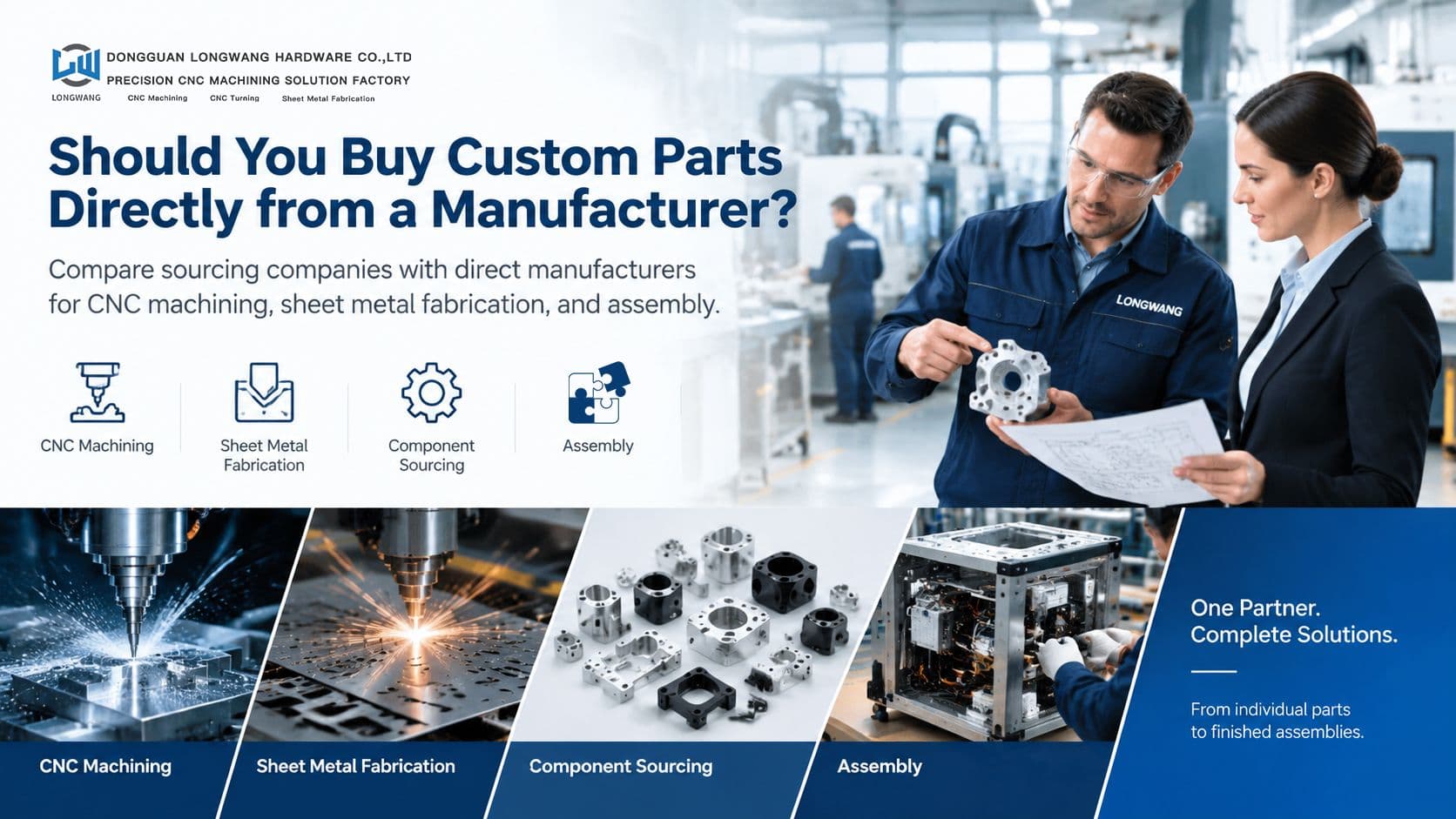
When sourcing custom CNC machined parts, sheet metal components, or assembled products, manufacturers have two common options: work directly with a factory or purchase through a sourcing company. Both approaches can work well, but the right choice depends on product complexity, supplier management resources, quality requirements, and total procurement cost.
For companies purchasing multiple types of custom components, working directly with a capable manufacturing partner can offer more than potential cost savings. A factory that combines CNC machining, sheet metal fabrication, surface finishing, component sourcing, and assembly can help simplify supplier management and coordinate the manufacturing process from individual parts to finished assemblies.
This guide explains the differences between buying directly from a manufacturer and working through a sourcing company, when each model makes sense, and what to look for in a manufacturing partner.
A sourcing company typically helps buyers identify suppliers, negotiate prices, coordinate orders, or manage purchasing activities. Some also provide inspection, logistics, and supplier management services.
A manufacturing factory produces components using its own equipment and production processes. Depending on its capabilities and supply chain, it may also coordinate secondary processing, purchase complementary components, and assemble finished products.
The table below lists the details of responsibilities, technical information, production coordination, and commercial relationships between the sourcing company and the factory.
| Factor | Sourcing Company | Direct Manufacturing Factory |
|---|---|---|
| Supplier coordination | Can consolidate orders across multiple suppliers | Can coordinate multiple processes within one manufacturing organization |
| Technical communication | May act as an intermediary between buyer and factory | Enables direct discussion with manufacturing and engineering teams |
| Pricing structure | May include a sourcing margin or service fee | Provides direct quotations for its manufacturing and related services |
| Engineering support | Depends on the sourcing company's technical expertise | Can provide manufacturing feedback based on actual production capabilities |
| Quality management | May coordinate inspection across suppliers | Can manage in-house processes and coordinate outsourced operations |
| Component purchasing | Often useful for consolidating products from different vendors | May source complementary components alongside manufactured parts |
| Assembly | Depends on its service network | May offer component integration and assembly as part of the manufacturing service |
Neither model is automatically better in every situation. A sourcing company can be valuable when a buyer needs access to many unrelated suppliers or lacks local purchasing resources.
However, when a project involves several manufacturing processes that can be coordinated by one capable factory, direct collaboration may reduce unnecessary handoffs and make technical problem-solving more efficient.
Custom parts are rarely just a matter of reproducing a drawing. Material selection, machining strategy, tolerances, surface finishing, and assembly requirements can all affect cost, quality, and delivery.
When buyers communicate directly with a manufacturing team, they can discuss these factors with the people responsible for production.
For example, a CNC machined aluminum bracket may require several precision features, tapped holes, and anodized surfaces. During design review, the manufacturing engineer may identify a tolerance that needs clarification or a feature that could be redesigned to simplify machining.
Early communication can help prevent avoidable manufacturing problems before production begins. Direct communication does not guarantee better quality, but it can shorten the feedback loop between design decisions and manufacturing execution.
A quotation for custom parts may include material, machining, tooling, surface finishing, inspection, packaging, and logistics. When purchasing through an intermediary, the buyer may receive a consolidated price that also covers sourcing or management services. That arrangement can be convenient, but it may make individual cost drivers less visible.
A direct factory quotation can make it easier to discuss manufacturing related cost factors, such as:
The objective should not be to eliminate every service fee. It should be to understand what the buyer is paying for and whether each cost contributes value. A sourcing company that reduces inspection problems, consolidates freight, or manages complex purchasing may justify its fee. A direct factory relationship is particularly attractive when the manufacturer can provide comparable coordination without requiring the buyer to manage every process separately.
Every additional handoff can introduce communication, scheduling, documentation, and transportation requirements.
Consider a project involving CNC machined aluminum components, a sheet metal enclosure, surface finishing, purchased fasteners, and final assembly. If each process is managed independently, the buyer may need to coordinate several suppliers, track different production schedules, resolve interface issues, and ensure that all components arrive together. A factory offering integrated manufacturing services can coordinate more of these activities within one production plan.
This does not eliminate every supply chain risk. Outsourced finishing or purchased components still require appropriate supplier management. However, a single manufacturing partner can provide a more centralized point of contact for the overall project.
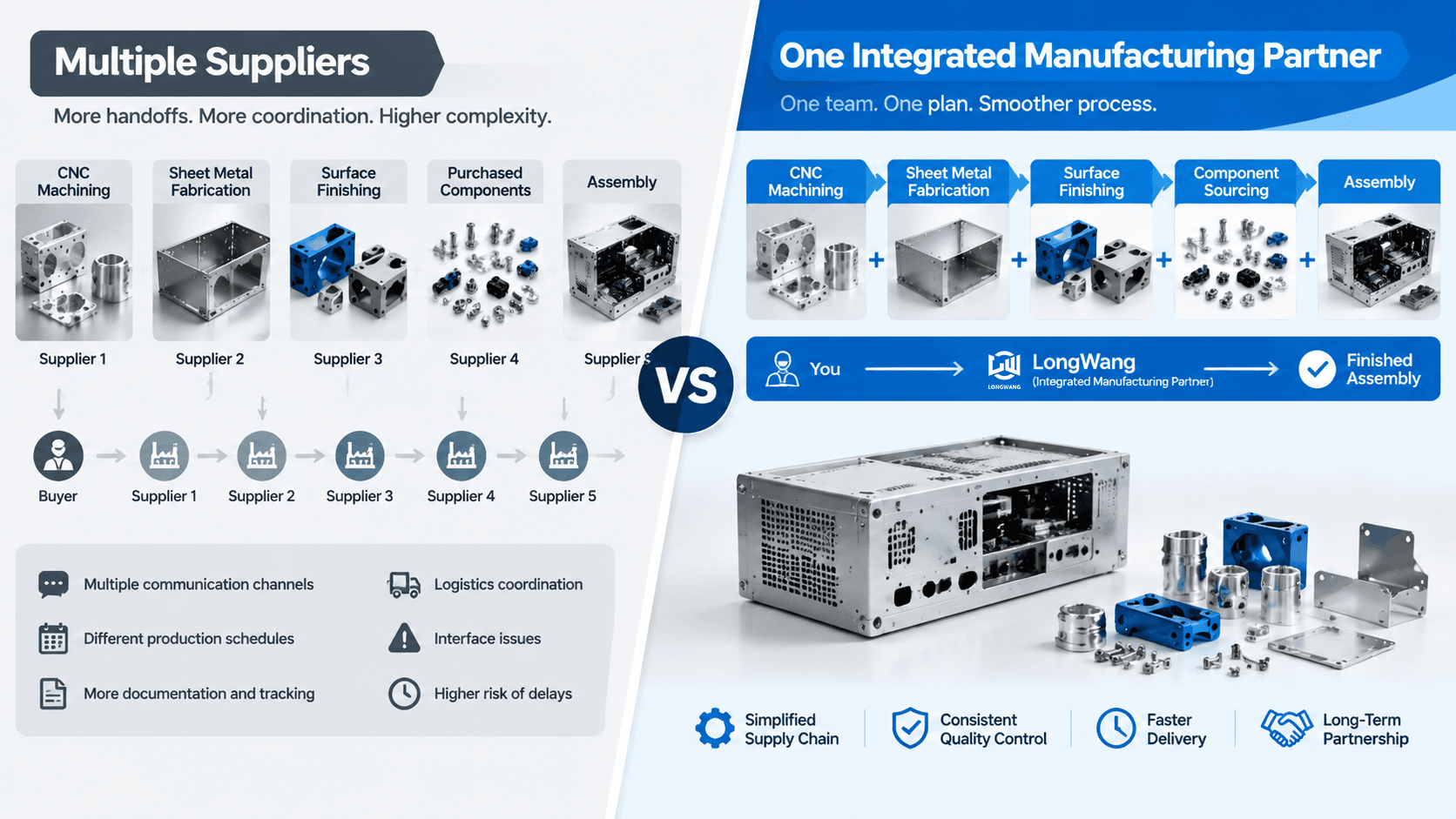
For equipment manufacturers, the real challenge is often not sourcing one machined component. It is obtaining all the components needed to build a working product. A manufacturing partner with multiple capabilities can help bridge the gap between individual part production and finished assemblies.
CNC milling and turning are suitable for many custom metal components that require controlled dimensions, machined interfaces, holes, threads, or complex geometries.
Typical applications include mounting brackets, housings, shafts, connectors, and structural components.
The appropriate process depends on the geometry, material, tolerance requirements, quantity, and intended application.
Sheet metal fabrication can include laser cutting, punching, bending, welding, and related finishing operations.
For industrial equipment manufacturers, coordinating sheet metal parts with CNC machined components can simplify the production of enclosures, mounting structures, access panels, and supporting frames.
When the same manufacturing partner understands both sets of components, the teams can discuss fit, mounting interfaces, assembly clearances, and production sequencing earlier in the process.
Not every part in an assembly needs to be custom manufactured. Standard fasteners, connectors, purchased hardware, and other complementary components may be more practical to source from established suppliers.
A manufacturing partner with component sourcing capabilities can coordinate these purchased items alongside custom-manufactured parts, subject to agreed specifications and supplier controls.
For the buyer, this can reduce the number of separate purchasing relationships involved in a project.
Manufacturing value does not stop when individual parts leave the machine. Components may need to be finished, inspected, fitted together, and assembled before delivery. Depending on the project, this can include mechanical subassemblies or more complete product assemblies.
A factory that offers assembly services can help coordinate part compatibility, assembly sequence, and inspection requirements.
The buyer should still verify the manufacturer's actual assembly capabilities, quality controls, and responsibility for outsourced operations. The goal is not simply to find a supplier that claims to do everything, but to find one that can manage the required processes reliably.
Direct factory collaboration is particularly worth considering when:
A sourcing company may be more appropriate when you need a broad range of unrelated products, local purchasing support, access to suppliers across different regions, or independent supplier coordination.
Some businesses benefit from combining both models. They may purchase integrated mechanical assemblies directly from a factory while using a sourcing company for unrelated components or suppliers outside the factory's capabilities.
The objective is to select the purchasing structure that best fits each project's requirements rather than applying one approach to every category.
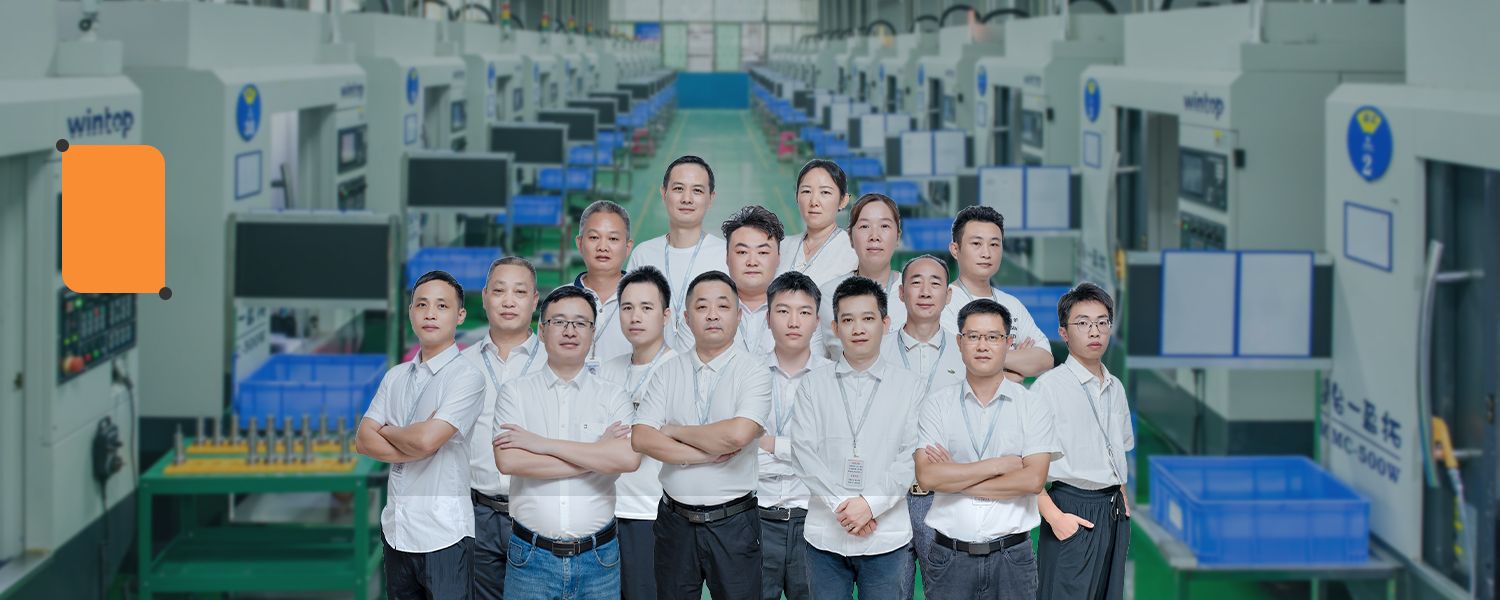
Longwang provides manufacturing services for customers who need custom precision components and coordinated production support.
Our capabilities include CNC machining, sheet metal fabrication, surface finishing, component sourcing, and assembly services. Depending on project requirements, these capabilities can help customers consolidate several manufacturing activities through one manufacturing partner.
Instead of coordinating every process independently, your team can discuss component requirements, manufacturing feasibility, finishing specifications, and assembly needs with a partner that understands the production process.
We support projects involving custom metal components and assemblies for industrial equipment and other applications where manufacturing requirements determine the appropriate process and supplier arrangement.
For a new project, you can start by sharing your part drawings, material specifications, estimated quantities, surface finish requirements, and delivery expectations. Our team can review the manufacturing scope and help identify the appropriate production approach.
Looking for a direct manufacturing partner for CNC machined parts, sheet metal components, or assembled products?
Contact Longwang to discuss your project and request a manufacturing quotation.
Next
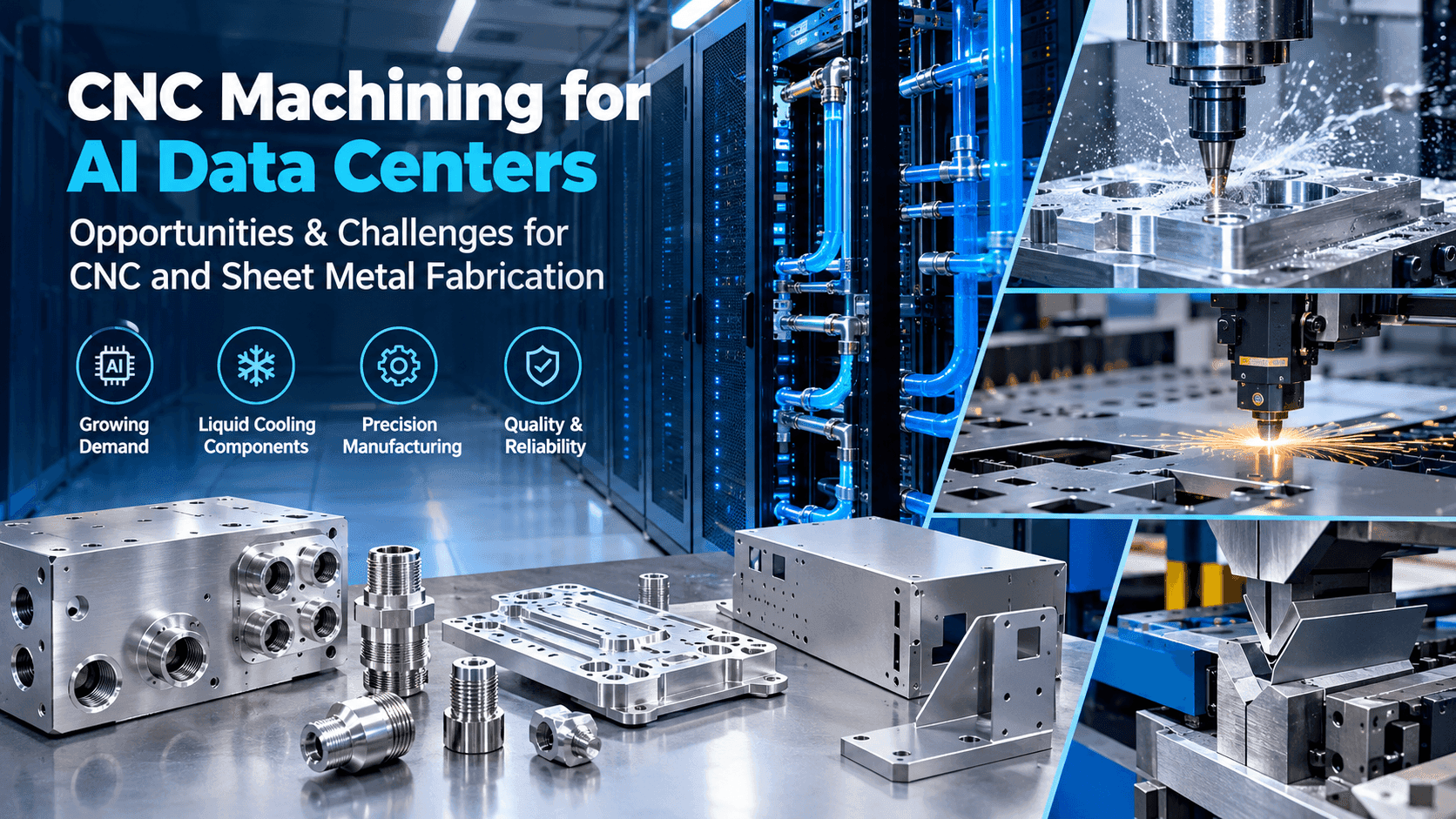
How Can CNC Machining and Sheet Metal Fabrication Companies Benefit from the AI Boom?
2026-10-27For CNC machining and sheet metal fabrication companies, this creates new opportunities beyond traditional industrial markets. As AI infrastructure expands, manufacturers may find demand for liquid cooling components, precision fittings, structural brackets, equipment enclosures, server chassis, and custom metal parts.
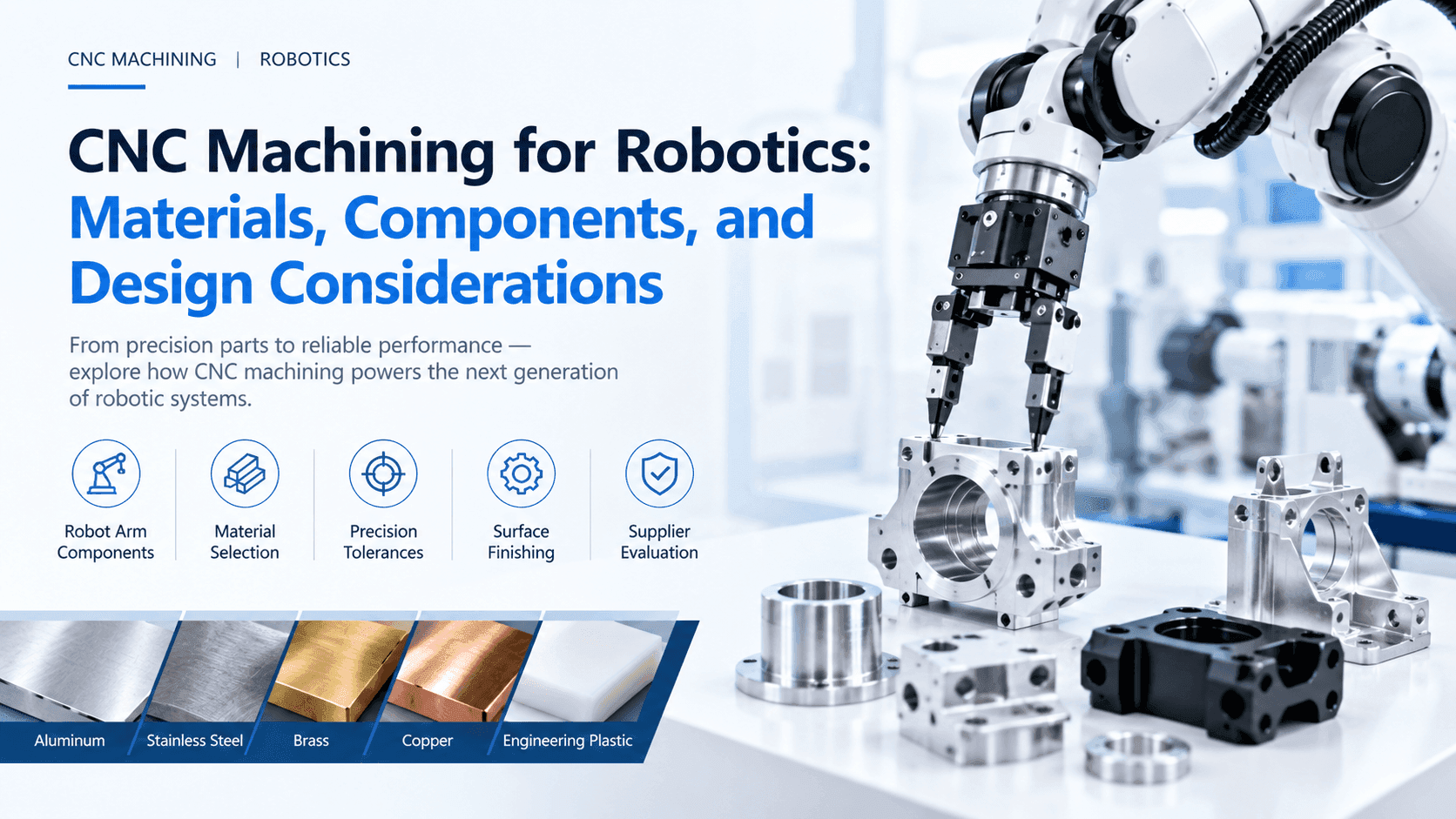
CNC Machining for Robotics: Materials, Components, and Design Considerations
2026-10-19CNC machining for robotics allows manufacturers to produce custom metal components with controlled dimensions, complex geometries, and functional surface finishes. However, successful production involves more than selecting a machine. Material properties, tolerances, part geometry, and assembly requirements must work together. This guide explains the main CNC machined robot parts, how to select suitable materials, and what engineers should consider when designing components for robotic applications.

Get in Touch With us
Helping customers grow steadily and achieve win-win development

Your trusted partner for CNC machining, sheet metal fabrication, stamping, and assembly. From prototyping to mass production with strict quality control.
tel:
0769-82763299
Mobile:
+86 18988716988
fax:
0769-82763199
Address:
No.3 Longze Road, Chang'an Town, Dongguan City, Guangdong Province, China,523861


Copyright © 2008-2026 | Dongguan Longwang Hardware Co., Ltd. | All Rights Reserved.


